Theodore Kreiger
Introduction:
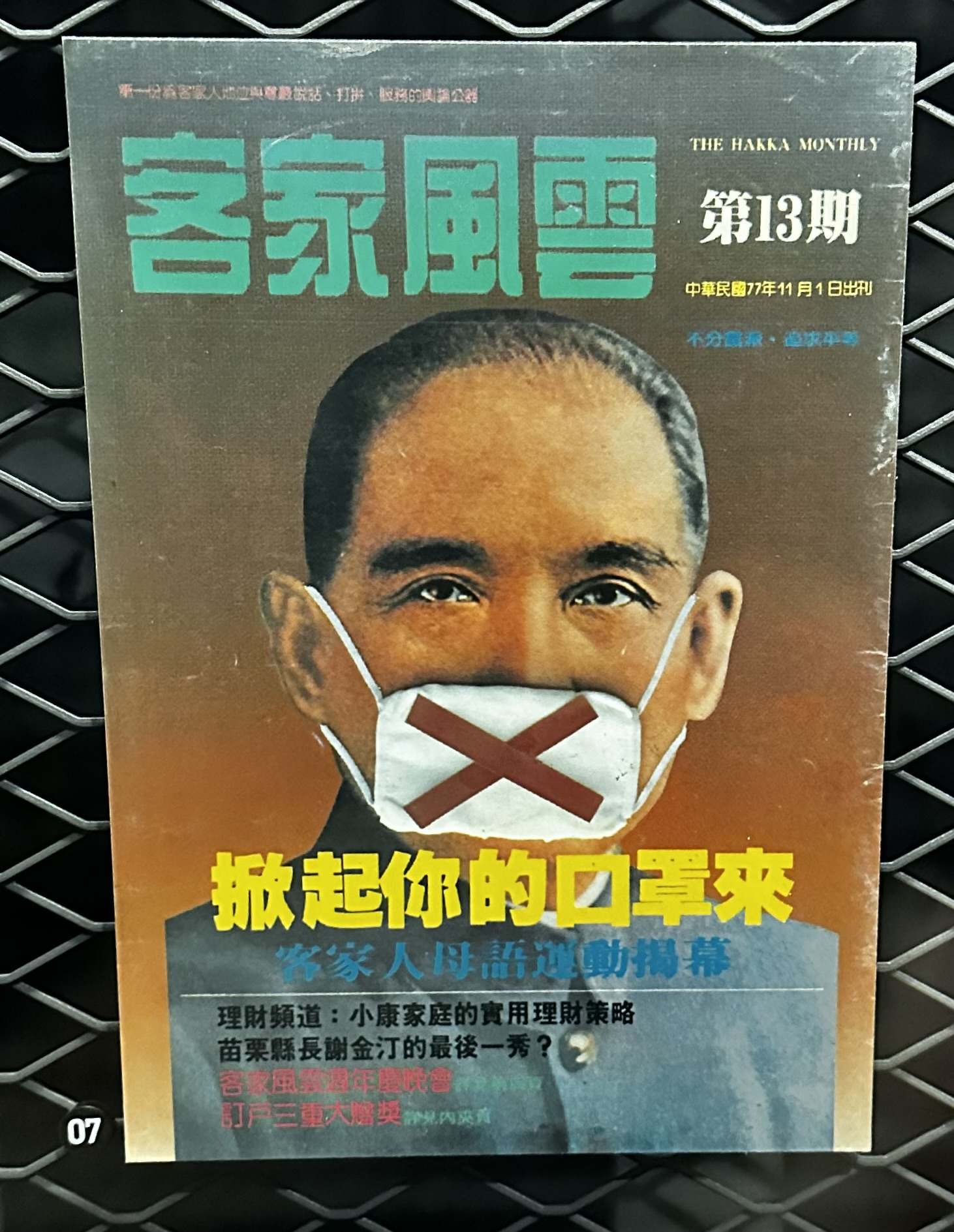
Starting in 2007, China began their Global Propaganda Expansion campaign, pouring $6 billion into programs to buy influence in foreign media companies and exert influence over social media, putting more and more money into these programs year after year (Huang 2020). In 2020 Taiwan launched an aggressive counter campaign to fight rampant disinformation and the spread of CCP propaganda. How was Taiwan able to resist China’s propaganda machine despite the disproportionate amount of resources allocated while still being the main target?
What about this relatively small island has made them resistant to this excessive exercise of “sharp power” targeted at destabilization, polarization, and disinformation? This paper will focus on the systematic analysis of China’s use of media control to further their agenda, and how Taiwan’s government and civil society have come together to hold it at bay. It is my proposal that Taiwan’s strength lies in a term I’ve dubbed Democratic Pride: a sense of almost nationalistic pride that has emerged from their hodgepodge history of colonialism and the denial of democratic rights, a pride that has fostered a remarkable system of community building and unity. I believe this pride has resulted in an unordinarily active and powerful civil society which is the key to media literacy in the age of computational propaganda, in a world of compromised media outlets.
China’s Propaganda Machine: The Nature of the Beast
Understanding Taiwan’s resistance efforts to Chinese sharp power begins with understanding how and why China exerts their power, which is done by examining the CCP’s motives in spreading propaganda, and the means by which they do it. It is equally important to understand the magnitude of the Chinese Communist Party Propaganda Department (CCPPD) to properly assess the Global Propaganda Expansion they launched. On a broad level the analysis of propaganda and disinformation have a consistent nature, in that they are a means to controlling public opinion, though they differ in how they accomplish this goal and the specific effects they produce. For the purposes of this paper I have used Nerino’s definition, which I have found to be broadly representative of what scholars understand propaganda to be: a piece of media that attempts to pass itself off as unbiased and purely informative, but whose sole purpose is to present a narrative about the information that agrees with its authors in order to further their belief or agenda (Nerino 2023). While not inherently malicious, it is inherently manipulative, and seeks to change or create narratives that follow an agenda operating in the interest of those who administer the propaganda. Disinformation is a different form of influence that seeks to spread false information as truth, and this specifically leads to polarization. These fall under the umbrella term of Sharp Power, which is the external influence exerted by another country through the vessel of media. I will use the broader term sharp power predominantly because it also includes the ability to control media, either directly or indirectly, by means of a country’s power, and has the added inclusion of systematic underrepresentation of news (Siegel 2013). It has been observed that authoritarian regimes tend to spread more external influence by way of sharp power, whereas democracies exert it more domestically, China being a primary example of the former (Bradshaw 2018). Such trends are indicative of the interests of the governing body: while democracies have to convince their own citizens of a narrative in order to maintain power, authoritarian regimes can rely on their monopoly of violence to retain power. Therefore, the interests of the autocrat often lie in projecting their power outward. Sharp power works by utilizing the abundant strength and resources of a country in an organized way, promoting its own interests and controlling the narrative around them. China is an excellent example of this because of their highly structured and organized authoritarian regime, which means they don’t encounter opposition when spreading their narrative domestically, which means they have a unified narrative spread internationally. The CCP is deeply invested in the cultural narrative they embody, so sinking a significant amount of resources into promoting it across various media platforms and networks, they create a status quo of Chinese excellence globally which validates the nationalism at the heart of their ideology. Once a status quo is established it becomes easier to uphold than to fight. Simply put,the goal of propaganda or sharp power is to become the doctrine that must be disproven (Chomsky 2001). The same strategy used for domestic control can be deployed internationally with the establishment of networks of information and support. As the influential scholar David Siegel wrote:
Fruitful strategies to inhibit the spread of antiregime collective action involve promulgating states’ own status-quo bias among elites while using superior local knowledge to take advantage of bottlenecks in social networks. This appears to be in line with what the Chinese government presently does. (Siegel 2013)
Propaganda works best when paired with disinformation, because disinformation has the effect of creating polarization, resulting in the dissolution of trustworthiness in the news media landscape, and makes room for a narrative with uncontested information or a constant stream of information that has to be consistently contested. The promotion of fake news, and the strategic underrepresentation of stories in official news outlets works in tandem with social media platforms to amplify these stories, or lack thereof, in a media cascade, which is very effective at manipulating the perception of unscrupulous consumers (Siegel 2013). Because it can be assumed that most people engage in news on a cursory level they don’t have any reason to suspect what they’re being shown is insufficient or false. Additionally, since this is a large group of people who don’t have the time or energy to examine the interests of those providing them with information, the group’s magnitude facilitates the perpetuation of the narrative being posed to them. Taken as a whole, a well-organized media machine can, in theory, control the cultural narrative of a whole society by promoting fake news, hiding incendiary stories, promoting their own interests, which all works to slowly build up a narrative or change the status quo without need for a large inciting event. The muddier the waters, the harder it is to swim.
The CCP’s outward push of their agenda is a relatively new phenomenon, and signifies the culmination of Jiang Zemin’s “Hide and Bide” wave of China’s development, a movement which focused on hiding China’s strength and biding their time until the country had the resources to protect itself from external threats as well as exert influence itself. The CCP we see today, under Xi Jinping, is more aggressive in shaping its own narrative, and now feels it has the capability to do so worldwide (Bardy 2025, Shambaugh 2007). This is seen today in the “United Front”, a wave of external media control in order to boost pro-China sentiment as well as explicitly targeting and combatting unfavorable perspectives (Shambaugh 2007). It is not only meant to spread Chinese ideology, like Confucianism and the Chinese model of society, but also push party line politics for the CCP, and among those politics, combating the idea of Taiwanese independence is specifically enumerated (Huang 2020). This is accomplished by the Chinese Propaganda Machine, which is interested in promoting the “Chinese Dream” (China’s potential for prosperity), hiding posts or stories that disparage China, all the while pushing the idea that China and Taiwan are one, sewing seeds of polarization in Taiwan, and making direct attacks directed at partisan issues (Brady 2025, Hartcher 2019, Huang 2020).
How, then, does China accomplish this goal? That is, how does the Chinese Propaganda Machine operate, and to what extent is it involved in controlling the narrative in Taiwan? Firstly, China has a documented network of influence in foreign media outlets. The short list of confirmed cases is as follows: Radio Beijing, Central People’s Broadcasting System Taiwan and Hong Kong services, CCTV broadcasting to Taiwan of Cross-Strait Voice (Haixia zhisheng), publications such as People’s Daily foreign edition (haiwai ban), China Today, Beijing Review, People’s China, China Pictorial, China Daily, Voice of China, and Liaowang weekly edition (Brady 2025, Shambaugh 2007. Fuchs 2018). All of these official outlets have, in some significant capacity, been infiltrated by the Chinese government, accepting money to promote Chinese propaganda, and underrepresent whatever the CCP may perceive as anti-Chinese sentiments. It is important to note that these relationships are not explicit, and in fact are often hidden as indirect relationships, so these companies may retain their legitimacy. This is particularly effective in Taiwan’s media landscape because of how generally unprofitable news outlets are in Taiwan due to harsh competition, as well as the increasingly quick media cycle or “speed culture” (速時文化) (Huang 2020). China has also helped pioneer what scholars have dubbed Computational Propaganda, which is defined by its use of social media platforms and “involves learning from and mimicking real people so as to manipulate public opinion across a diverse range of platforms and device networks” (Samuel 2017). The use of computational propaganda can be used in several ways to influence the population, but the most common use is disinformation. Taiwan’s national security apparatus has begun to spot more and more Chinese content farms cropping up, creating a massive online army to work as an external factor which can amplify whatever disinformation has been propagated by the infiltrated news outlets, while burying under-covered stories from independent news outlets (Hsiao 2018). Taiwanese citizens understand that their social media platforms, network, and television programs to present them disinformation ‘often’ if not every day (Pan 2022). These don’t only combat an existing narrative against China, the CCPPD’s Waishi foreign policy system works to pre-empt criticism that may be thrown at the CCP, according to sinologist Anne-Marie Bardy, it “is a defensive tactic to control the threat of the impact of foreign society on the government’s political power” (Hartcher 2019). This type of system is another means by which the CCP may not only control the narrative but create it, allowing them to build up their One-China Policy as the status quo, influence elections, and push Taiwan towards their end goal of unification.
Taken altogether, it is apparent that the CCP’s United Front is a wave of sharp power that affects every aspect of the media. They can create narratives through their social media operations, spread this further through their official news outlets, and drown out those who may attempt to call out the disinformation or cherry-picked narratives. This is a well-oiled organization that very purposefully seeks to undermine legitimate news outlets and change the status quo towards a pro-China, One China narrative.
Why Hasn’t Taiwan Reunified?
How has the island of Taiwan resisted the largest and most intricate media manipulation system that has ever been devised? The united effort of the Taiwanese government and Taiwan’s robust civil society to promote Taiwanese Democratic Pride. This sense of pride emerges from Taiwan’s unique history of occupation, struggle against imperialist powers, and effort to surge out of authoritarian rule, becoming a leading democracy. It is apparent to anyone who spends any time in Taiwan that there is a sense of reverent appreciation for their relative freedom, given their understanding of their own history, and systems of repression the country as we know it today comes from.
The history of oppression under Chiang Kai-shek’s martial law holds specific prevalence because of how recent it was, leaving a solemn reminder of how easily a nation can fall into tyranny. This can be seen in the homages to the past littered through Taiwan’s streets, in their architecture, and throughout their cities, the Chiang Kai-shek memorial being of particular relevance. First made to promote the grandeur of his regime, the Chiang Kai-shek memorial acts, now, as a cautionary tale of history, filled with exhibits which display different authoritarian states, and guide the guest down a dark winding hall that displays the means by which people are kept in line by government. This Orwellian exposé of authoritarianism stands as a monument to the battles fought against oppression and imperialism, a monument which towers impossibly high in the middle of the city, where Chiang Kair-shek first had it erected. This grim display is not unique, even in the city of Taipei. The National Human Rights Museum, which is set in a former prison for those suspected of treason, or Chinese communist affiliation, holds exhibits which attempt to reconcile the past of human rights abuses carried out at the hands of Chiang Kai-shek’s military dictatorship. The walls are littered with old signage urging citizens to turn in anyone they suspect of being involved in communist rebellion, like the eye of Big Brother. Grim cells, a drab excuse of a doctor’s office, and a large granit wall which etches the over 12,000 names of those held, beaten, and killed during the White Terror. These monuments are erected to show the potential for harm that arises when the government oversteps its authority, when they violate their social contract, and the Taiwanese do their best to reconcile the atrocities carried out on the island.
Interestingly, though, Taiwan didn’t democratize through revolution (though it would certainly be ignorant to suggest that public uprisings didn’t play a pivotal role in democratization), but rather was a unique case of top-down democratization. Following the surrender of power from Chiang Kai Shek’s successor, and numerous reforms to the government’s executive, in 1992 Taiwan held its first multi-party democratic election (Harrison 2017). Even before this, Taiwan’s history is marked by occupation, suppression of truth and opinion alike, and the subjugation of the island’s inhabitants for the gain of colonial powers. The political landscape of Taiwan exists in the context of their colonial history, meaning Taiwanese culture can be understood through then lens of a repressed people. To the end of understanding the Taiwanese people on a sociological level, scholars have utilized W.E.B. Du Bois’ concept of the veil of invisibility. This veil refers to the state of the oppressed, who are aware of the conversations around them and their status as second-class citizens, but also hold an awareness that they are ineligible to join the conversation due to their position, creating a double consciousness (Du Bois 1903, Lo 2006). This manifests in the repressed group presenting a personality with appeals to their oppressors, while maintaining solidarity with their group members behind closed doors. So when the veil was lifted, and the people allowed to organize, organize they did. And what is important about Taiwanese political culture is where its cleavages lie, as many countries are assembled on a foundation of fragmentation, where ethnic and social cleavages create increased hostility, disunity, and polarization. But, because Taiwan emerged from a right-wing authoritarian government so recently, the two primary democratic parties are both left-leaning (Wong 2003).
Civil society is the key pillar of working-class representation in Taiwan, as it attempts to bridge the gap between cultural cleavages, giving direct access to institutions that are able to exercise influence over government (Lo 2006). The Neo-Tocquevillian understanding of civil society is that the public institutions act as a direct line from the public to the government, which may simultaneously reinforce democracy and civil liberties, while also supporting the public through the allocation of resources to public goods (Bernhard 2017, Peterson 2004). This is incredibly important, especially in the context of emerging democracies in which the people are operating under rudimentary democratic institutions, nubile parties, and emerging from relative poverty. Civil society gives the basis of workers rights through organized labor unions, and human rights from mass outcry against past violations, allowing precedent to be set for how a new society should operate, establishing social norms and class that work as a check to capital class (Qian 2009). This was certainly the case in Taiwan, having been held under a long period of martial law, where sharp economic disparities formed between the ruling class and the subjugated working class. Civil society works as a tool which boosts prosperity mostly indiscriminately, which is where Taiwan’s strength was, as the social/ethnic divisions were distinct from economic disparity, and continued to develop in this path following the Taiwanese cultural norm of equitable growth (Wong 2003, Peterson 2004). An example of such a case of civil societies active role in creating a more equitable and democratic society was the reorganization of the antiquated judicial system that remained after transition. After an organized force of NGOs fought back against the lack of horizontal accountability, the judiciary that was acting as ‘an authoritarian enclave’ was remade to represent the social interests of the people and equally applied justice (Qian 2009).
Civil Society is also the means by which powers can be decentralized, and democracy enforced. The Gramscian school of thought argues civil society is a check on the overreach of authority by the government, often manifesting as the impediment of individual and civil liberties. Therefore the activation of civil society was a natural response to the white terror period where martial law authoritarianism saw continuous violations of people’s rights and liberties by the elite, allowing redistribution of power through civil society and the process of left-leaning democratization (Bernhard 2017, Wong 2003). This trend of civil society growth and democratization has continued, even today the public sector is inheriting more power. For instance, in 2016 an amendment made the process of recalls easier, meaning that if the public could accrue enough signatures they could get local representatives ousted from office. In 2024-2025 the 2 Blue Bird Movements (青鳥運動) occurred in response to the KMT and TPP forming a coalition in the Yuan (Parliament) and attempting to pass reforms that would strongly expand their power. The movements involved the rallying of the people around the recall of many local and legislative representatives for anti-constitutional and anti-democratic practices (Tedards 2025). This is a good indicator of an advanced civil society, as being able to act as a strong influence disconnected and decentralized from the main governing body implies that these organizations wield real power (Peterson 2004). Another example of Taiwan’s strong public sector is the grassroots development of a new party, the NPP or New Power Party, which built itself up out of young people’s dissatisfaction with the current administration’s priorities. Today it holds 13 seats in Parliament (16 at the time of the article referenced), demonstrating an impressive level of democratic elasticity (Read 2019).
It is this uniquely robust civil society that has been the contemporary basis for Taiwanese resistance to China’s sharp power. Testament acquired from local citizens and students and teachers from Ren Ai Agricultural Vocation School (仁愛高農), indicates that most of the younger generation gets their news predominantly from social media, and the older population from traditional news media outlets. And, as previously mentioned, both of these information sources are compromised and as such the shared disingenuous perspective they sell escalates the disinformation and narrative they’re pushing. In response, Taiwanese civil society has organized on mass to launch media literacy campaigns, correcting disinformation, acknowledging funding from compromised sources, and revealing truth from Chinese propaganda (Dotson 2026, Huang 2020). This takes the form of social media campaigns which provide corrective information in polite and humorous ways that are designed to be easily digested and internalized by the public (Huang 2020). It is only by taking this information directly to people where they exist and where they find their news that they can begin to deconstruct the tidal wave of confusion the Chinese government has sent to sweep over Taiwan. Such social cohesion and flexibility is possible because of Taiwan’s immense civil society that has been empowered by official government support, while also being distinct from the government, because otherwise it is liable to be co-opted by partisan politics or at least be framed exclusively in that perspective. In other words, it is precisely because the civil society is a representation of the people exclusively, as a decentralized pillar of the country, that it can promote the truth.
This campaign against China’s attempt to swing the population towards polarization cannot end on the internet either, it must surge forward into public spectacle, which is where Taiwan excels. The Taiwanese are certainly not strangers to public demonstrations or movements, and this campaign was no exception. Taking to the streets, young and old alike found themselves at protests to spread awareness, at classes to teach media literacy, and spreading the word far and wide (Huang 2020). This is a facet of Habermasian thought, or as they are more commonly known today, 3rd spaces, in which people can gather and socialize not for work or at home but out in the public sphere (Lo 2006). The promotion of local businesses, night markets, temples, and other gathering spots for the people promotes a sense of community, decreasing polarization, especially in an uncertain phase of statehood, which seems intrinsic to Taiwan (Lee 2005). By promoting this the building of community they’ve removed a barrier to entry in getting involved in civil society, or having access to the benefits it provides, and thus more people are empowered to join in the movement against China’s sharp power. Today the Taiwanese people are distinctly aware of disinformation and its spread, with a 2022 survey suggesting that the vast majority of citizens are aware of its occurrence at a relative frequency, and about 97% agree that the issue is serious (Pan 2022). Due to the media literacy campaign, Taiwan has been able to find and take down a significant number of misleading social media posts and accounts from Facebook and LINE that were traced back to China, though they’re limited in this regard by China’s aptitude for hiding their influence through proxy actors, and have officially labeled the issue of disinformation as a public health issue (Huang 2020).
Conclusion
The Taiwanese media literacy campaign, and the mobilization of many NGOs and civil society groups in unison with the government support has been driven by a deep democratic pride, and a loud outcry against those who would try to undermine the institutions they’ve created. By organizing across social media and through the in person spaces where the people can congregate, Taiwan has made significant progress in fighting Chinese sharp power in a way that is uniquely effective. Because of this, many countries around the world have looked to Taiwan as a reference point for the ideal counter-attack in the information war China and other media powerhouses have begun waging (Huang 2020). It is this democratic pride that binds these groups of people together in order to protect the freedoms they have, and the will of the people that supports a government which seems to be constantly under immense pressure from the other side of the strait as they skate on already thin ice.
Bibliography
Bernhard, Michael, Tiago Fernandes, and Rui Branco. “Introduction: Civil Society and Democracy in an Era of Inequality.” Comparative Politics 49, no. 3 (2017): 297–309. http://www.jstor.org/stable/26330959.
Bradshaw, Samantha, and Philip N. Howard. “The Global Organization of Social Media Disinformation Campaigns.” Journal of International Affairs 71, no. 1.5 (2018): 23–32. https://www.jstor.org/stable/26508115.
Brady, B.-M., Sobalvarro, B., Kennedy, B., & Green, B. M. A. (2025, April 16). China’s Foreign Propaganda Machine. Wilson Center. https://www.wilsoncenter.org/article/chinas-foreign-propaganda-machine
Chomsky, Noam. 2001. Propaganda and the Public Mind: Conversations with Noam Chomsky. South End Press. https://doi.org/https://Propaganda and the public mind.
Dotson, John. 2026. “Taiwan’s Efforts Towards “All-of-Society Resilience” in the Face of Chinese Threats”. Global Taiwan Insitute 11( 3).
https://doi.org/https://globaltaiwan.org/wp-content/uploads/2026/02/Issue-3.pdf. Du Bois, W. E. B. 1868-1963. (1903). The souls of black folk: essays and sketches. Chicago: A.C. McClurg & Co..
Fuchs, Christian. “Propaganda 2.0: Herman and Chomsky’s Propaganda Model in the Age of the Internet, Big Data and Social Media.” In THE PROPAGANDA MODEL TODAY: Filtering Perception and Awareness, edited by Joan Pedro-Carañana, Daniel Broudy, and Jeffery Klaehn, 8:71–92. University of Westminster Press, 2018. http://www.jstor.org/stable/j.ctv7h0ts6.8.
Harrison, mark. 2017. “The end of martial law: An important anniversary for Taiwan”. Lowy institute. https://lowyinstitute.org/the-interpreter/end-martial-law-important-anniversary-taiwan.
Hartcher, Peter. 2019. “How China and the CCP aggressively push beyond their borders”. The Age. https://theage.com.au/national/peter-hartcher-on-china-s-infiltration-of-australia-20191118-p53bly.html.
Hsiao, Russell. 2018. “CCP Propaganda against Taiwan Enters the Social Age”. China Brief 18( 7). https://doi.org/https://jamestown.org/ccp-propaganda-against-taiwan-enters-the-social-age/.
Huang, Aaron. “Combatting and Defeating Chinese Propaganda and Disinformation: A Case Study of Taiwan’s 2020 Elections.” Belfer Center for Science and International Affairs, Harvard Kennedy School, July 2020
Lee, Sook-Jong. “Democratization and Polarization in Korean Society.” Asian Perspective 29, no. 3 (2005): 99–125. http://www.jstor.org/stable/42704516.
Lo, Ming-cheng M., Christopher P. Bettinger, and Yun Fan. “Deploying Weapons of the Weak in Civil Society: Political Culture in Hong Kong and Taiwan.” Social Justice 33, no. 2 (104) (2006): 77–104. http://www.jstor.org/stable/29768372.
Ostapenko, Maryna. 2025. “The Role of Civil Society in Countering Disinformation: International Experience and Prospects for Ukraine”. Journal of Information Policy 15. https://doi.org/https://doi.org/10.5325/jinfopoli.15.2025.0013.
Pan, Michelle. 2022. “Obervation of Taiwanese Opinion on Misinformation”. Ipsos. .
Peterson, Timothy. 2004. “The Pacific, and Challenges Facing American Nonporfitss: Defining Characteristics of Civil Society”. The International Journal 6( 2). https://doi.org/https://The International Journal.
Qian, Yijiang Karina. “The Institutionalization of Democratic Civil Society in Taiwan: A Case Study of NGOs Working on the Hsi-Chih Trio Case.” Asian Survey 49, no. 4 (2009): 716–39. https://doi.org/10.1525/as.2009.49.4.716.
Read, Graeme. “Sharp Power, Youth Power, and The New Politics in Taiwan.” In Power, edited by Jane Golley, Linda Jaivin, Paul J. Farrelly, and Sharon Strange, 179–84. ANU Press, 2019. http://www.jstor.org/stable/j.ctvfrxqkv.21.
Samuel C. Woolley & Philip N. Howard, “Computational Propaganda Worldwide: Executive Summary.” Samuel Woolley and Philip N. Howard, Eds. Working Paper 2017.11. Oxford, UK: Project on Computational Propaganda. comprop.oii.ox.ac.uk. 14 pp.
Shambaugh, David. “China’s Propaganda System: Institutions, Processes and Efficacy.” The China Journal, no. 57 (2007): 25–58. http://www.jstor.org/stable/20066240.
Siegel, David. 2013. “Social Networks and the Mass Media”. American Political Science Review 107( 4): 786–805. https://doi.org/https://10.1017/S0003055413000452.
Tedards, Bo. 2025. “Taiwan’s 2025 Recalls: A Civil Society Perspective”. Global Taiwan Institute. https://globaltaiwan.org/wp-content/uploads/2025/07/PB_BT_Taiwan2025Recalls_FINAL.pdf. Wong, Joseph. “Deepening Democracy in Taiwan.” Pacific Affairs 76, no. 2 (2003): 235–56. http://www.jstor.org/stable/40024392.

