Kai Woitalla
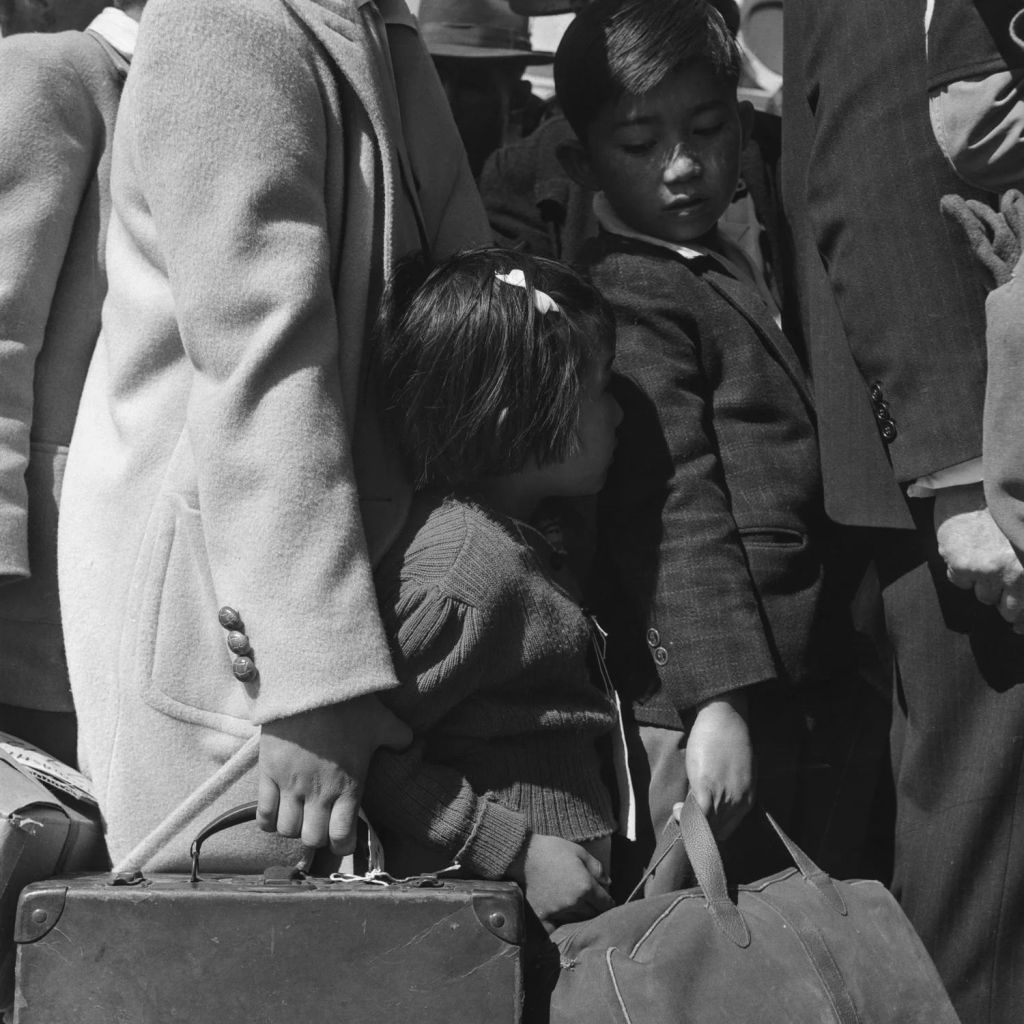
On December 7, 1941, Japan launched a military attack on Pearl Harbor. Two months later, Executive Order 9066 was issued, and launched the relocation of approximately 112,000 Japanese Americans (“Japanese-American Incarceration during World War II”). The topic of this relocation has been largely discarded by the public, resulting in a lack of education on the topic. Many of the stories of those who suffered
have been lost to time, but some of them have been preserved in a special way: theatre. Though it might not be the most traditional way of preserving the history of an event like this, many of the stories of Japanese Americans during the 1940s have been recorded in plays. These plays tell important, first hand stories of the citizens who were failed by the government. They elevate the voices of those who are silenced in history, and bring attention to the horrors that are disregarded by the oppressors. Jeanne Sakata’s Hold These Truths, Wakako Yamauchi’s 12-1-A, and Chay Yew’s Question 27, Question 28 brings to the stage the history of Japanese Americans who were failed by their own government.
Hold These Truths follows a young college student, Gordon Hirabayashi, who resisted the curfew order and unlawful relocation of Japanese American citizens in 1942. The play is written through the perspective of Hirabayashi himself. It starts off reminiscing about some of his childhood experiences, both the good and the bad. The play continues on, detailing his journey through the education system, including his college life. When the bombing of Pearl Harbor occurs, Hirabayashi is affected by the curfews and discrimination enabled by the government. However, he soon realizes that he is a U.S. citizen himself, and there is no reason he must abide by these laws, as they are unconstitutional. After being detained for breaking this curfew, Hirabayashi continues to defy the orders of the government. He refuses to go to the internment camps of his own free will, but the government cannot force him to go, as he must sign in, or it would be unlawful. Hirabayashi chooses to instead stay in prison, even asking for a longer
prison sentence in order to serve his time outdoors. His case makes its way all the way to the Supreme Court, who comes to the verdict that the imprisonment of Japanese Americans is, in fact, constitutional. Eventually, he is released, and Japanese Americans are slowly freed from the camps. Hirabayashi marries his college sweetheart, but is bound to run into trouble with the law soon, due to his answers on questions 27 and 28 of the loyalty questionnaire. A few years later, a professor from the University of California calls, telling him that a young woman has found evidence that the mass incarceration had no military necessity. The play ends with Hirabayashi’s return to court, this time with a victory, as the court decides that the imprisonment of the Japanese American population was unconstitutional.
There are numerous pieces of the play that are referenced in the text that have quite a rich history behind them. At one point, Hirabayashi thinks back to some of the things said about Japanese Americans after Pearl Harbor: “‘Herd ‘em up, pack’em off and give them the inside room of the badlands’” and “‘If they stick around, there’ll be Japs hanging from every pine tree…’” (Sakata 38). These statements are a direct result of influence from the government’s own statements, as well as their spreading of false information.
Before the attack on Pearl Harbor, there was already discrimination and prejudice against Japanese Americans due to Japan’s involvement in the war. For some, the attack made them feel valid in their fears, while others changed from positivity and/or neutrality to hate. For example, California’s governor, Culbert L. Olson, originally advocated for the protection of Japanese Americans as American citizens. However, after Pearl Harbor, he made a complete turn around, stating that he was “…thinking of ordering all Japanese, alien or citizen, to stay in their houses ‘to avoid riot and disturbance’” (Daniels 21). Congressman Leland Ford was also an advocate for these citizens’ rights, but in the first week of January, he also changed his mind, stating that “…if
an American born Japanese, who is a citizen, is really patriotic and wishes to make his contribution… to this country, right here is his opportunity to do so… by permitting himself to be placed in a concentration camp…” (Daniels 22).
These statements were not the only thing that increased the hatred of Japanese Americans. False reports and misinformation are equally to blame. For example, General DeWitt created an evacuation proposal plan and four days after its approval, War Secretary Stimson submitted a recommendation to the attorney general to put it into effect. This report included blatantly false statements from DeWitt about Japanese activity on the coast. He stated that on the Pacific Coast, “…radio communications, undoubtedly coordinated by intelligent enemy control were continually operating…” and that “…not a single ship had sailed from [their] Pacific ports without being subsequently attacked.” (Daniels 23). These lies allowed for the government to push these plans into action under the guise of defending themselves. However, it is now known that there was not nearly as much Japanese activity on the coast as DeWitt described. In reality, only nine submarines were operating on the coast, with only four of them ever attacking. Additionally, when Stimson submitted this recommendation, “…there had been no Japanese forces off California for more than a month” (Daniels 24). Overall, government officials’ speeches, along with the circulation of false information, created a false panic in the public, leading to many of the statements represented in Sakata’s work.
Hirabayashi’s court cases are also referenced in the play, as he makes his way to the Supreme Court twice, first in 1943 and one again in 1985. During Hirabayashi’s first case, the court ruled that “‘In my opinion, this goes to the very brink of constitutional power’” (Sakata 86). This statement comes from Justice Frank Murphy, one of the justices on the Supreme Court during Hirabayashi’s 1943 case. Hirabayashi argued that it was unconstitutional for the curfew
and evacuation order to be placed upon Japanese American citizens. Murphy argued that these things were in fact not protected by The Fifth Amendment because it “‘…contains no equal protection clause and it restrains only such discriminatory legislation by Congress as amounts to a denial of due process.’” (Irons 61-2). He defends these actions, claiming they are constitutional simply because there is no racial protection in the Fifth Amendment, only the right to due process. However, he excuses the denial of due process to Japanese Americans by citing that “‘…the aim of Congress and the Executive was the protection against sabotage of war materials and utilities in areas thought to be in danger of Japanese invasion and air attack.’” (Irons 62). The Supreme Court is able to rule these laws constitutional because they are protecting the States from “espionage and sabotage,” and they are a military necessity. However, the idea of military necessity was blown out of the water when Dr. Irons, a professor from the University of California, called Hirabayashi, asking to reopen his case. A woman by the name of Aiko Yoshinaga had found a report, along with several other pieces of evidence, revealing that there had been no military necessity for the imprisonment of Japanese Americans, and everything had been caused by “racism and hysteria” (Sakata 97). The case was reopened in 1985, and closed again in 1987.
In the evidentiary hearing, Rod Kawakami, Hirabayashi’s lawyer, detailed the evidence they had to support their case. They submitted a report from Lieutenant Commander Ringle, in which he had reported that “…it was not necessary to evacuate Japanese…” and that “…the entire ‘Japanese Problem’ has been magnified out of its true proportion… it should be handled on the basis of the individual… not on a racial basis.” (Irons 293). There were several other reports reaffirming these ideas as well as confirmation for lack of espionage. The statements from these reports proved the lack of military necessity for evacuation, and therefore any sort of action had
been racially motivated. After this hearing, Kawakami submitted briefs of these documents, in which he “traced the paper trail” that proved this suppression of evidence and destruction of evidence. Several of the documents are transcripts or telegrams between government officials, many recommending changes to the original version of DeWitt’s Final Report (a mass collection of reports). Additionally, in 1943, a telegram was sent to General Barnett from Karl Bendetsen, DeWitt’s aide, in which he told him to “‘take action to call in all copies previously sent to WD… and to have WD destroy all records of receipt of report…” (Irons 294). With all of these documents in mind, Kawakami was able to prove that the government’s original reports were quite different from the ones actually produced to the public. After decades of fighting, Hirabayashi and thousands of Japanese Americans finally received justice, however small it may be, when Justice Voorhees, the presiding judge, proclaimed that “It is now considered by almost everyone that the internment of Japanese-Americans during World War II was simply a tragic mistake for which American society as a whole must accept responsibility.” (Irons 384).
Hold These Truths is a beautiful portrayal of the life of one man and his journey to the Supreme Court. Sakata puts Hirabayashi’s life on the stage for her audience, and they follow him as he grows up, and through his fight for his and others’ rights. Overall, Sakata intertwines one man’s personal history with the history of thousands, and provides several important pieces of the history of Japanese American internment. Though her play focuses on the legal fight during this time, there are other plays that focus on different aspects.
Question 27, Question 28 is a play originally commissioned by the Asian American Theatre Company in 2003. The play tells the stories of several Japanese Americans who were prisoners of the internment camps. It is not performed in traditional theatrical style, but instead is performed as a stage reading, with slides to indicate scenes. In the beginning, the play gives the audience insight into the several people’s lives before the bombing of Pearl Harbor. The audience learns about where these people were born, their ancestry, their jobs, all the pieces of who they were as they grew up. As the play progresses, the characters relay what happened during the bombing itself. They give firsthand accounts of the exact things they were doing, where they were, how they found out, etc. As the country grapples with the attack, the stories continue, detailing the aftermath of the attack, and how the country around them reacts. They tell stories of FBI raids on their homes, and the enactment of a curfew for those of Japanese ancestry. Eventually, they are torn from their homes, and viewers are told the stories of their evacuations. The audience hears about the lack of time given to pack, the separation of communities, how they were held in horse stalls until they could be transferred to actual camps. The details of their lives in camp are shared, the memories of lack of privacy, how they somehow made these places into a “home”. Finally, the characters reminisce on their release from the camps. They remember coming home to nothing, having to relearn how to “fit in” with the society that abandoned them. They are left hoping that with the hope that something like this will never happen again. This play focuses on the stories of people who were actually imprisoned in the camp. The audience learns bits and pieces about their lives before, during, and after the internment camps. Though there are several pieces of the story that are important to discuss, there are two pieces that require a bit more research to fully understand their impact: the issue of the curfew and area restrictions and the implementation of education in the camps.
Before the evacuation of Japanese Americans, the government created zones where “enemy aliens” could or could not be. General DeWitt created a plan, splitting California into category A and B zones. A zones barred all enemy aliens, and B zones allowed them to remain, but they were closely monitored and controlled (Daniels 23). Soon after this, a curfew was
implemented in certain areas, restricting where German, Italian, and Japanese citizens could be, and what times they could be there (“Timeline: Japanese Americans during World War II (U.S. National Park Service)”). Citizens were removed from the corresponding zones. Despite these restrictions applying to all enemy aliens, it could be seen that racial prejudice against the Japanese prevailed. One character notes that “‘…we had this German family right next door, and they were as German as German could be, and they were free. They could do anything they wanted, and nobody was bothering them. Why us?’” (Havis 241). One of the most interesting things about this is the demographics of the areas where these zones were located. In most of the A zones, the total enemy alien population was under 7000, and in B zones, only a third were Japanese (Daniels 23). Despite these, Japanese citizens bore the brunt of the restrictions, watching German and Italian immigrants freely live their lives around them.
Yew also provides brief stories about the education of those in the camps. One teacher, Eleanor Gerard Sekerak, remembers how she was asked to come to Topaz because they were in “desperate need of teachers”. She also reflects on trying to figure out how to teach kids about “‘democratic principles while we sat in classrooms behind barbed wire.’” (Havis 260). These pieces of her story hold a large amount of background behind them, and it is important to understand it in relation to the characters’ stories. The idea of a desperate need for teachers during this time is not an overstatement. Within the camps, the student to teacher ratio was 48:1 for elementary students and 35:1 for secondary, and public schools nationwide held a 28:1 ratio (James 43). There was a substantial amount of trouble in finding teachers to staff the schools within the internment camps. This can be explained by the poor working conditions, prejudice they faced, and a general lack of educators during the time. Educators themselves lived in the internment camps, and were separated from the general administration of the camp. They also noted that it “‘…[felt] like anything but a schoolroom.’” (James 52). The classes were all held in one large room, with no divisions between them. Additionally, there was a severe lack of resources, with one teacher stating that “‘…all the school barracks were absolutely bare.’” (James 46). Lastly, there was a nationwide teacher shortage at the beginning of the war. All of these factors led to a struggle for educators within the internment camps.
In regards to content, it strayed from the traditional schooling of the public. The schools are described as having “a singular history of imposing policy aims on the schoolchildren and families.” (James 71). This was seen in a plethora of ways. Schools tried to teach Americanization, trying to assimilate Japanese citizens and to help them in preparation for their return to society. Some schools even created classes teaching how to decorate their barracks “the American way” (James 71). Overall, these schools were not the traditional schooling of math, english, etc. They were meant to “educate” Japanese Americans on the way of being a true American, and to push the government’s ideals onto them.
Yew’s play provides a unique perspective and insight into a handful of individuals. They all tell their stories, filled with a variety of emotions. Yew allows us to get a glimpse into their lives, and we are able to learn more about their lives as people inside and out of the camps. This play follows many people, but there are others that shine a spotlight on even smaller groups of people.
12-1-A tells the story of the Tanaka family and their soon-to-be friends during their imprisonment in the Poston, AZ, camp. The playwright, Wakako Yamauchi, was imprisoned in the same camp. It begins with the arrival of the Tanaka family at their designated barracks,
12-1-A. As a storm blows in, several other residents take shelter in the barracks. A few months later, the characters have formed some bonds, and the Tanaka family has settled in more. Soon, Mitch, the family’s eldest son, announces that he is going to work outside at a beet farm. During the months that he is gone, the story follows the other characters as they progress through life in the camp, getting jobs, forming relationships, and still struggling with life inside a prison. At one point, a mass protest forms, and the camp residents fight against the transfer of two prisoners to another camp. Ken, a close friend to Koko (Mrs. Tanaka’s daughter) is confronted by someone at the possibility of being an informer, someone supplying the government with inside information about the camp life. When Mitch returns, he reveals that his life as a worker was not much different or better than his life inside the camp. Mrs. Tanaka tells him that the government has started recruiting Nisei (second generation Japanese immigrants) for a segregated section of the army, and he is disgusted. Yo, Koko’s best friend, tries to keep everyone’s hopes up, saying that she knows they’ll be getting out soon. Months later, residents of the camps are slowly released, but there is a caveat. They must fill out a loyalty questionnaire. Questions 27 and 28 discuss loyalty to the U.S. and the army, and Mitch refuses to swear allegiance. Mrs. Tanaka decides that if Mitch is saying no, so will the rest of the family. They do so knowing that they will be sent to Tule Lake, a camp known for holding the “troublemakers” of other camps. In the last scene, the Tanakas say their goodbyes, and their friends all go on their own paths. The Tanakas leave, heading for Tule Lake, knowing that they will be deported to Japan after.
There are several aspects of 12-1-A that are important to the history of Japanese internment. However, focusing on all of them would be improbable. Focusing on a few out of the many representations is just as important. The play provides some brief insight into two very important ideas: the use of Japanese Americans for labor outside of the camps, and the Poston camp strike.
A few months into the Tanakas’ stay at Poston, Mitch decides that he is going to take a job opportunity outside of the camp to harvest sugar beets, describing it as “a chance to be free for a little while” (Yamauchi 00:38:15-00:38:17). Though he thought that this would be a chance for him to get out of the camp and live a different life, this was not really the case.Japanese Americans in the camps were extorted for their labor by the same people who put them in there.
Soon after the Japanese community was evacuated, there was a large labor shortage. Colonel Karl Bendetsen stated that he “realize[d] that the evacuation of Japanese from the farms… upsets the economic order” (Hinnershitz 57). Additionally, beet crops require extensive amounts of land and cheap labor, and sugar companies controlled most of the “migratory labor that the industry depended on” (Hinnershitz 61). Because of this, the removal of mass amounts of Japanese immigrants greatly disrupted the workforce in farming areas. Despite the racism that led to their removal, farmers seemed to disregard race when it came to finding cheap labor. Some farmers in Idaho even refused to plant crops until they received specifically Japanese American laborers (Hinnershitz 62). As time went on, the original goal of removal and imprisonment became muddy. The people were used and extorted as a mass of cheap laborers, both in and out of the camps.
Due to the mistreatment of workers and their working conditions, strikes and protests were bound to occur. In 12-1-A, it is mentioned that a “mass protest” is being held (Yamauchi 00:51:12-00:51:14), which later turns into a “strike against general policy” (Yamauchi 1:03:12-1:03:15). This strike, though only mentioned briefly, was very important in the history of the camp, known as the Poston Strike of November 1942. The Issei were upset that they had no
representation on the council while the Nisei held seats in it. The two groups fought, and later on, several camp members being beaten for suspicion of being informers, people who would provide inside information on the camp to the administrators (Robinson 164). More attacks occurred a few days later, leading to the arrest of George Fujii and Isamu Uchida. On November 18, a few thousand prisoners led a strike, demanding that the men be released. As word spread, an Emergency Executive Council, uniting both Issei and Nisei, formed to support the release of Fujii and Uchida (Robinson 165). The strike lasted for a week. Prisoners stopped working, guarded Fujii and Uchida from being transferred, blasted music, raised flags, etc. Eventually, administration gave in, and through conversations, Issei received representation in administration, and one of the men was released, with the other on trial (Robinson 165). This strike was extremely important to the inmates of Poston camp, uniting those inside with a common purpose and giving them more of a sense of true democracy that had been taken away from them. In the end, it led to better representation of the voices of those inside, being able to speak for themselves.
Originally, the story of the Tanakas may seem as if it is only a personal story about no more than just one family and their friends. However, Yamauchi adds elements of the greater picture. She allows the audience to understand what was happening to these people, how they were extorted, and how they stood up for themselves. She educates the audience, though it may be brief, on some of the very important aspects of Japanese American incarceration. Though seemingly not traditional, theatre is an excellent and unique way to preserve history. It allows society to not only hear these stories, but to physically see them. Plays elevate the voices of those who have historically been spoken over, allowing for them to be seen in ways they have not been before. Hold These Truths, Question 27, Question 28, and 12-1-A are all separate stories, but through them, society is able to learn and understand the lives of Japanese Americans and the story of their imprisonment.
Bibliography
Daniels, Roger. The Decision to Relocate the Japanese Americans. Edited by Harold Melvin Hyman, Lippincott, 1975.
Havis, Allan. American Political Plays After 9/11. Southern Illinois University Press, 2010. EBSCOhost, search.ebscohost.com/login.aspx?direct=true&AuthType=ip,shib&db=e700xna&AN=45 2291&site=ehost-live&scope=site.
Hinnershitz, Stephanie. Japanese American Incarceration : The Camps and Coerced Labor during World War II. University of Pennsylvania Press, 2021.
Irons, Peter H. Justice Delayed : The Record of the Japanese American Internment Cases. 1st edition., Wesleyan University Press, 1989.
James, Thomas. Exile within : The Schooling of Japanese Americans, 1942-1945. Harvard University Press, 1987.
“Japanese-American Incarceration during World War II.” National Archives and Records Administration, National Archives and Records Administration, http://www.archives.gov/education/lessons/japanese-relocation#background. Accessed 14 Nov. 2024.
Robinson, Greg. A Tragedy of Democracy : Japanese Confinement in North America. Columbia University Press, 2009.
Sakata, Jeanne. Hold These Truths. Ageloff Books, 2021.
“Timeline: Japanese Americans during World War II (U.S. National Park Service).” National Parks Service, U.S. Department of the Interior, home.nps.gov/articles/000/timeline-japanese-americans-during-world-war-ii.htm. Accessed 14 Nov. 2024. Yamauchi, Wakako. “12-1-A by Wakako Yamauchi.” Internet Archive, uploaded by Northwest Asian American Theater, 18 January 2019, https://archive.org/details/2008.002.091.001

