Zoe Tedesco
During the 1910s and continuing into the 1940s came a period of rebirth. This was the Harlem Renaissance. Art, music, relative freedom, and power emerged from the heart of the Harlem neighborhood in New York City and the voices of Black Americans could finally be expressed through literature they had written. This period was also known by another name, the “New Negro” Renaissance. This term was coined in 1925 and was used by Black intellectuals and artists to reinvent Black identity. It was thought to separate them from the history of slavery and challenged the beliefs many, particularly white, people had. Racial uplift organizations such as the National Association for the Advancement of Colored People (NAACP) and the National Urban League rose in Harlem and “celebrated the New Negro as a break from a long-established stereotype of the uneducated Black laborer who would forever be dependent on white power…” (Handbook 5). While Black Americans welcomed this change in racial relations and power dynamics, many white Americans thought differently. They turned to violent acts and aggression to try to re-establish the power and control they once had over them. In this paper, I argue that Marion Cuthbert’s “Mob Madness” and S. Miller Johnson’s “The Golden Penknife” use the themes of violence against Black Americans and anti-black racism to demonstrate the imbalance of power between people of different races during the Harlem Renaissance.
The NAACP and the National Urban League both provided a platform for Black voices. They were widely viewed as “two major magazines of the period were the NAACP’s Crisis and the National Urban League’s Opportunity, both based in New York” (Handbook 15). Crisis was established in 1910 by W.E.B. DuBois, the co-founder of NAACP and an important figure during the Harlem Renaissance, and is the official publication of the NAACP, which continues to be in print today (“History of the Crisis” NAACP). Not only did these magazines and others like them publish stories from Black writers, such as Marita Bonner and Langston Hughes, but they also had a largely white audience. Many took advantage of the opportunity for their voice to be heard and share their side of the story.
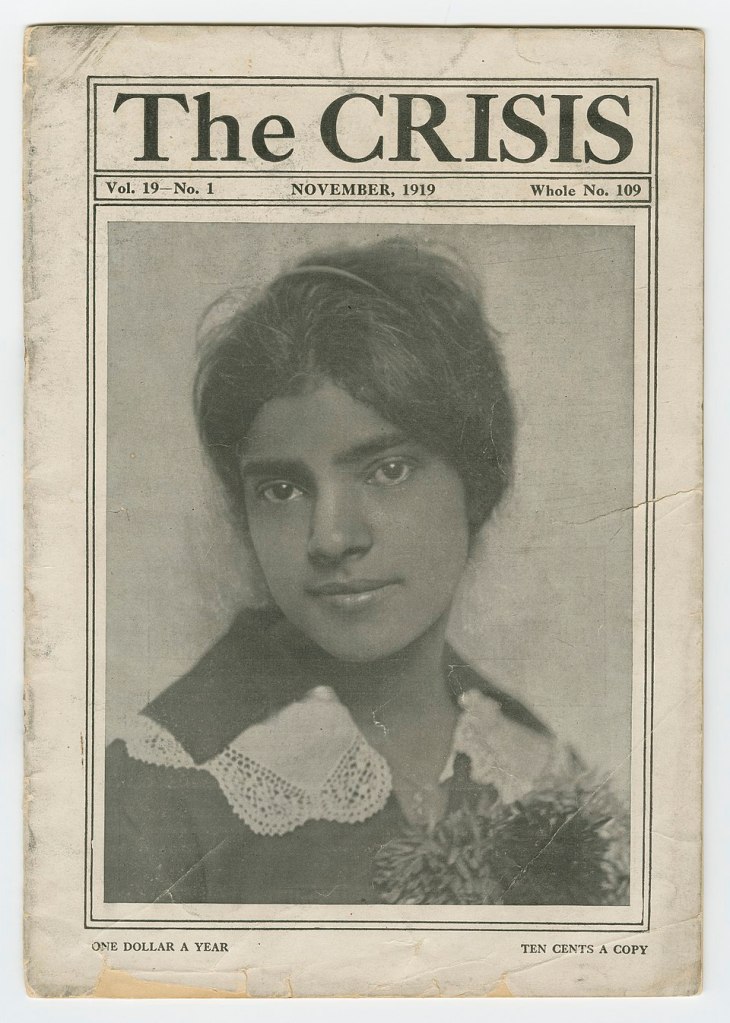
One of these voices was Marion Vera Cuthbert (1896-1989), a poet and essayist who took advantage of the platforms that racial uplift organizations gave her. Although she was a Black woman, she was educated, contradicting the stereotype of an illiterate, uneducated, and poor Black person. During the 1920s and 1930s, most of Cuthbert’s writings appeared, mostly poetry, short stories, and nonfiction. Her only short story, “Mob Madness”, was published in April of 1936 in Crisis. Anti-black racism and hatred are major themes in both the story and the period that it was written. The story also features a lynching.
These horrific murders were public and normally involved “a criminal accusation, an arrest, and the assembly of a mob, followed by seizure, physical torment, and murder of the victim” (NAACP). In only a few pages, Cuthbert conveys a message about the lengths human hatred can go to and shows “how lynching can be as destructive to the lynchers and their families as to the victims” (Gable XXIV). Her story demonstrates how deeply racism-based violence can affect people, either directly or indirectly through vivid imagery and the actions of the characters.
The story is told from the perspective of a white woman, Lizzie. She and her husband Jim (referred to as Big Jim) have two children, a teenage son and a baby daughter. Lizzie is also pregnant with a third child but has kept this hidden from her family. At the beginning, the family sits at a table eating breakfast. Big Jim has just returned from a lynching and is recounting the tale as his son, little Jim, who has a “foolish grin of admiration and wonder” on his face (Gable 423). Little Jim had gone with his father to watch the lynching last night and had come back exhilarated, wanting to see more. Lizzie hadn’t attended, utterly confusing her neighbors, but the horrific knowledge of what her husband had done and what her son had witnessed caused her to simply stand there with “her eyes wide with fever and horror” (Gable 423). In the end, she kills her daughter, not wanting her to grow up in a world full of hatred, and commits suicide herself.
Lizzie, through death, was able to escape and save her daughter Bessie from the influence of an environment full of human hatred. However, there’s little hope for the boy. The narrator explains that “…little Jim was like his father. The other day he had spoken sharp to her. As big Jim so often did. He said she was too soft and finicky for her own good. Most boys were like Jim. […] …some boy would touch her [Bessie] soft, fair flesh at night, and go forth into the day to hunt a thing in the bush, and hack at its flesh alive…” (Gable 425). This quote demonstrates that the boy’s mind has been completely warped and twisted by his father. The morals and ideals of his father have become his own. The community around little Jim sees nothing wrong with what they are doing. Anti-black racism and hatred for their Black neighbors have been normalized, and so have the lynchings, to the point of hunting people like prey for sport and attending the public murders for entertainment. Little Jim doesn’t know to be horrified by this like his mother is because he doesn’t know a life that hasn’t been influenced by his father, his community, and the period that they live in.
During the era of the Harlem Renaissance, it wasn’t uncommon to hear of such things in the news or to know of someone who had been lynched. If one becomes the target of an angry mob, there’s not much one can do except run or hide, but few escape their fate. The hunted are powerless to stop or reason with the hunters because they’ve decided that it is within their right to carry out a death sentence. Lynching was a tool and a means of control “used by white mobs […] as a method of racial terror” (Handbook 7). Not only does lynching demonstrate the power one group has over the other but their control and influence also extended to those they didn’t hunt, as the fear of being the next to die kept Black Americans powerless. It was also used to conform them to white standards or racial expectations and to keep them in line.
Lynching was also done to gain or keep hold of political power and demonstrate the control white people had over Black Americans. This is seen in “Mob Madness.” In many cases, there was little to no evidence to support the accusation made against a Black person but they were usually believed to be true and a mob would gather. Some took advantage of this and “false accusations made by white people against Black people were one of the main tools for inciting mob violence” (Handbook 7). No Black American had the power to defend them, speak out, or otherwise prove the accusation to be false, because of the fear that they would also become a target. Because lynchings were often public, the mobs would advertise them as “rare spectacles,” as if they were advertising a circus.
As the murders of Black Americans continued, people like Marion Cuthbert began to fight back. Supported by the voiceless, the lynchings prompted “political agitation from racial uplift groups (such as the N.A.A.C.P., which named their literary magazine, Crisis, in response to the problem)” (Handbook 7). As an organization that promoted anti-lynching activism and gave Black people a platform, the power dynamic shifted when they stepped up. Publishing literature written by Black authors on a variety of subjects including lynching, they were able to gain some measure of power against the white mobs by spreading awareness and fostering empathy. Crisis and its literature showed Black Americans that they had support from something bigger than themselves, likely acting as a source of comfort while living in a frightening time. Crisis and other magazines were also able to challenge the believed stereotypes and mindsets of their largely white audience.
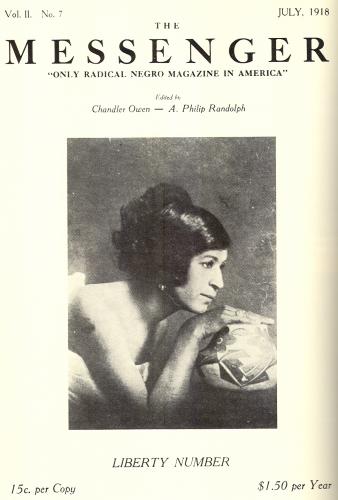
“The Golden Penknife” by S. Miller Johnson is an excellent example of this and his short story demonstrates how harmful it can be to conform to white standards or racial expectations. Although little is known about him, he also wrote poetry which appeared in the literary magazine Messenger as well as Abbott’s Monthly from 1927 to 1931 (Gable 528). “The Golden Penknife” was published in Messenger in August 1925 and shares many of its central themes with “Mob Madness.” It’s told from a third-person perspective and switches between focusing on the two main characters: Anna Paul and Fred Soskii.
At the story’s beginning, it’s revealed that Fred and his family are Russian and own several grocery stores. Anna’s family has a “flourishing and respectable liquor business” (Gable 119). Anna and Fred were in love and were to be married in June, six months from when the story takes place. Despite being an immigrant, the community holds Fred in high regard because he “knew the value of putting business before pleasure. His parents liked that in him. Others also liked that in him” (Gable 120).
As the story progresses, Anna and Fred’s relationship begins to fall apart. After not seeing each other for three weeks, their first conversation is tense. Anna acts coldly toward Fred. It’s revealed that she’s thinking about someone else, a man named Tervanovitch, and is falling out of love with him. While Fred can tell that something is wrong, he remains steadfastly loyal to her and turns down a potential fling with a dancer named Natalie whom he met at a cafe, taking her golden penknife as a “souvenir.” He has also heard rumors that Anna has met someone else, which are confirmed when Anna tells Fred that she can’t marry him because she doesn’t love him anymore. After this rejection and seeing her dance with a person of color, he confronts and kills her, feeling betrayed that “Anna had thrown him aside for that black dog” (Gable 133).
By the end of the story, Fred Soskii becomes truly “Americanized”, conforming to white ideals and becoming violent and aggressive (Gable 135). Not only is he wounded by Anna’s rejection of his love and the end of their future marriage, but he’s also outraged at the idea that Anna chose a person of color over him. After seeing her dance with her new partner, he says to his friend Stanisky “There’s Anna! Well, damn. Is that why she threw me over? For that damn thing. She can’t love him. I won’t let her!” (Gable 133). This entitlement over Anna and his negative feelings towards Tervanovitch leads Fred to murder Anna.
This is exactly the kind of thing that Lizzie from “Mob Madness” was terrified of. She didn’t want to be in such a harsh and cruel world, and she didn’t want her daughter to grow up in that environment. She feared repercussions from the community surrounding her if she had spoken out against the lynchings and violence. This is partly because it was her husband who was participating in them and speaking out against him would have been unwise during the 1920s. Seeing no other alternative, she chose death. Through her death, she demonstrated that “women have power over the horrors men commit to the extent that they are willing to sacrifice their reproductive abilities, their children, or themselves” (Gable XXIV). Fred’s friend Stanisky and the community around him are pushing their racist ideals, morals, and prejudices onto him and to fit in, he goes along with them. His actions are in direct contrast with the idea of women having power over men and their crimes. Rather than having to live with the fact that Anna loves a person of color, he takes matters into his own hands and “corrects” what he believes is wrong through murder.
Both “The Golden Penknife” and “Mob Madness” contain themes of violence, anti-black racism, and power. Instead of having everyone on the same playing field, these stories show a realistic imbalance of power between white and Black Americans as well as men and women. In “Mob Madness”, Cuthbert shows how lynching hands all the power to white vigilante mobs, causing those not participating to be terrified and rendering them as powerless as the Black American being hunted. The story also shows how a woman can gain power over her husband’s horrible deeds by removing herself, and potentially others, permanently from a hostile environment. In “The Golden Penknife”, Johnson demonstrates how conforming to white standards and racist expectations can drastically change one’s morals and influence their actions. A person can be pushed to the extreme and, as Johnson shows, they can also become violent and aggressive to the point of murdering those who don’t fall in line with twisted ideals. One message from Marion Cuthbert, and S. Miller Johnson in their stories is conveyed clearly: violence against Black Americans and anti-black racism ends in death.
Bibliography
Gable, Craig. Ebony Rising: Short Fiction of the Greater Harlem Renaissance Era. Indiana University Press, 2004.
Govan, Jennifer. “Today in History: Marion Vera Cuthbert Is Born: March: 2023: Blog: Gottesman Libraries: Teachers College, Columbia University.” Teachers College – Columbia University, Gottesman Libraries, 15 Mar. 2023, library.tc.columbia.edu/blog/content/2023/march/today-in-history–marion-vera-cuthbert-is-born.php.
“History of Lynching in America.” NAACP, 11 Feb. 2022, naacp.org/find-resources/history-explained/history-lynching-america. “History of the Crisis.” NAACP, 11 Feb. 2022, naacp.org/find-resources/history-explained/history-crisis.

