Nathan Hill
The phrase “coming out” used in a queer context has evolved over the years. In our modern understanding of the term, a person comes out when they announce their queerness to an assumedly straight audience, whether that audience be friends, family, or peers in some other way. While individuals in this audience may be queer, the very act of coming out presupposes a heteronormative world—it is an announcement of deviation from a supposed standard, an act that straight people never find themselves in the position to need. Therefore, we can look at our modern understanding of “coming out” as a practice aimed externally towards the hegemonic structure of heterosexuality. This was not the case for past iterations of the term. In its usage within queer domains during the times of the Harlem Renaissance, the act of coming out was not the admission to queerness to a heterosexual audience, but to the larger queer community. It was an exhibition nonetheless, but one “used to refer to the ritual of a debutante’s being formally introduced to, or ‘coming out’ into, the society of her cultural peers” (Chauncey 7). We see in this iteration an interior coming out, not directed to the self, but one for the queer collective. This is a ritual with its back to the dominating forces of society, one by and for queer people themselves.
This thought of audience, of outward-facing versus inward-facing messaging, should be at the forefront of our minds as we go forward in this paper. The same question is essential to examine when looking at racial themes in the Harlem Renaissance’s work—are these stories written by Black people for Black people, or are they written for a white audience in order to instill more sympathy towards the Black community? It is the same structure of struggle that we see in this dichotomy of “coming out” interpretations. In fact, the two struggles, when they appear together, are inextricably linked; when queer subtext is present in the work of the Harlem Renaissance’s writers, the audience of race and the audience of sexuality cannot be separated from one another. Black writers such as Zora Neale Hurston, Angelina Weld Grimké, and Richard Bruce Nugent use queer codes—hidden language and themes within their texts—to signify to the audience their stories have a queer interpretation, and through analysis of these codes and how they are portrayed within a text, we may see the audience of the piece.
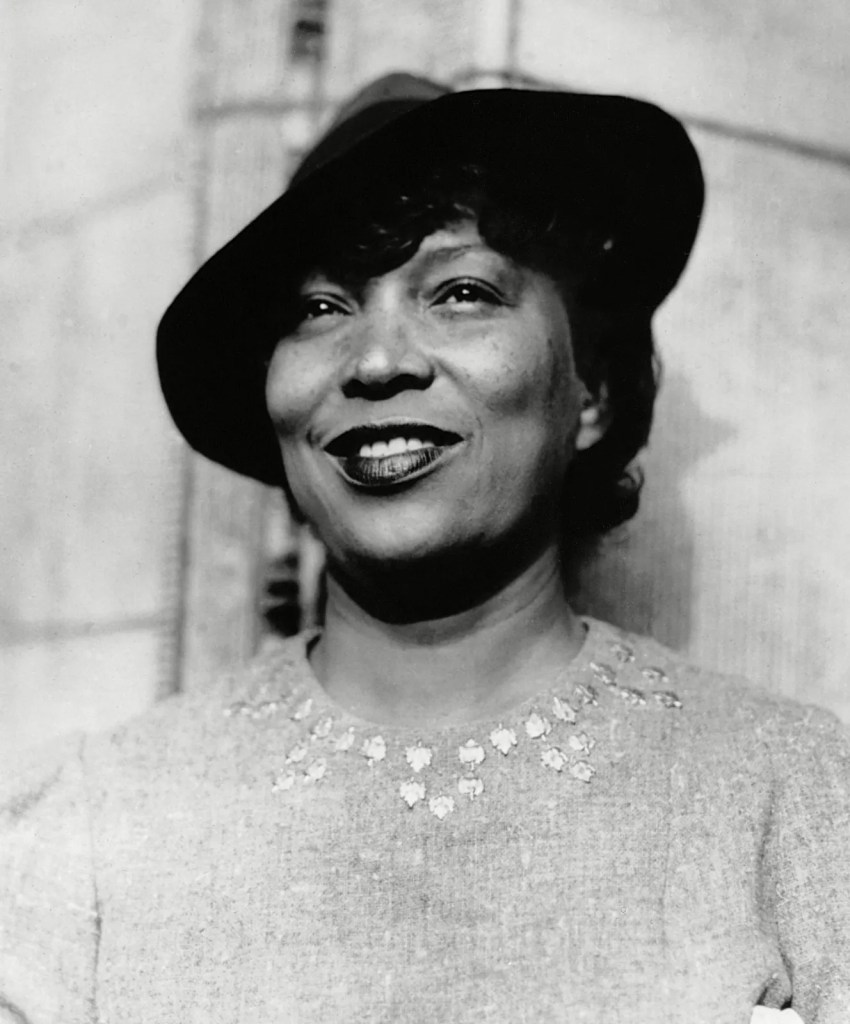
Despite our focus on queer identities, let us first turn our attention to a heterosexual author. Zora Neale Hurston, author of the short story “John Redding Goes to Sea” (1921), married three times in her life, all to men—there is no true evidence to call her sexuality into question. However, given Harlem’s status as “a homosexual mecca” (Chauncey 244) and Hurston’s publication in the literary magazine Fire!!, known for its provocative and transgressive material, it is safe to say that Hurston was literate in the language of queer people at the time.
This is apparent from the very beginning of “John Redding Goes to Sea”, which begins with “The villagers said that John Redding was a queer child” (Hurston 1). While of course the meaning of queer has evolved over the years and during this time period it could simply mean that John was strange, the word was also absolutely used among Harlem’s queer population. By opening this story in such a manner, Hurston primes the reader to be alert to double entendre throughout the piece. And double entendre there is—throughout the story, John Redding is constantly set apart from his community because of his otherness. He is distant from the desires of his mother, constantly yearning to travel to the sea, and flighty when it comes to romantic attachments. The only true kinship he feels is towards his father, whom the text repeatedly tells us “shared his same dreams and ambitions” (Hurston 4). The two both struggle with acting as men are supposed to act, a sharp clue towards queerness in a time period in which sexuality was marked by gender performance even more so than in the present day. Additionally, queer is a word used to describe John throughout the story, especially in relation to his shirking of traditional romantic relationships. Taken together, all these disparate factors mark John Redding and his story as indelibly queer.
But while Hurston obviously utilizes queer code within her work, making the claim that “John Redding Goes to Sea” is for a queer audience is a much more difficult thing. This is because of the portrayal of queerness as both an isolating force and one that can never be free. John Redding’s story does not end happily—during a flood, he is knocked from a bridge and drowns, never having fulfilled his dream of leaving his rural community. However, the story portrays his death as a sort of freedom, with his father letting John’s body float down the river “toward Jacksonville, the sea, the wide world—at last” (Hurston 15). In death, John Redding finally fulfills his desire for freedom, a desire deeply tied to his queer identity. He becomes the tragic queer character, a character doomed by his identity to an unfulfilled life in a world that is immutable in its oppression towards him. This trope has been used frequently throughout literature, meant to show “gay characters without coming under fire for breaking laws and social mandates against the ‘endorsement’ of homosexuality” (Hulan 17). For queer characters to exist in literature, they must be destroyed in some way in order to maintain the status quo. This is a much more palatable version of queerness for the heterosexual reader to swallow. Queer readers often relate to and identify with these tragic figures, but this is because it is what we are given in both life and literature—while relatable, it diminishes the queer life to one with one ending. It is not a liberatory trope to a queer audience. That said, to a straight audience it is a lament to the plight of the queer other. This can be tied to Richard Wright’s criticisms of Hurston on the topic of race; in his review of her novel Their Eyes Were Watching God, Wright lambasts her for her audience: “her novel is not addressed to the Negro, but to a white audience whose chauvinistic tastes she knows how to satisfy” (Wright 25). However harsh or accurate Wright’s critique is, and however her works have been perceived by Black and queer audiences, it points to the same central issue—authors writing Black and queer stories with white and straight audiences in mind.
Angelina Weld Grimké’s “The Closing Door” (1919) is a slightly more complicated case. Its position as a queer text is even more explicit than that of “John Redding Goes to Sea”; Lucy, the narrator, and Agnes, the woman she lives with, are extremely affectionate with one another.
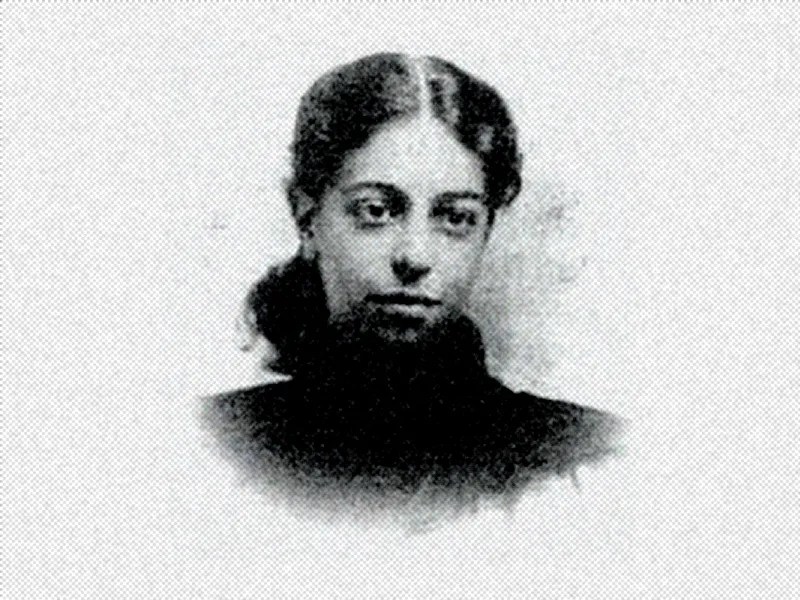
While Agnes is married to a man named Jim, the narrative depicts both Jim and Lucy as deeply devoted to Agnes, as she is to both of them. This dynamic is made explicit early on in the piece with Lucy narrating “I care for Jim; but Agnes Milton is the only person I have ever really loved” (Grimké 14). There is also the physical aspect of their relationship—in the scene in which Agnes announces her pregnancy, the two women are in constant physical contact, one covering the other’s eyes, kissing each other’s ears, quickly and catching breath at the sight of each other. It is the body language and actions of lovers—there would be no doubt about this fact if it were two characters of different genders. This is made ever more poignant by the fact that the author shows Agnes announcing her pregnancy to Lucy instead of her husband. Their queer relationship is barely subtext, their relationship clear in everything but name.
While the use of queer language is much more obvious than in Hurston’s work, “The Closing Door”’s audience is much more muddled. At first glance, it seems to utilize the same queer tragic death that “John Redding Goes to Sea” does—the story ends with Agnes’ death after being institutionalized for the murder of her infant son. Once again, the death is portrayed as a sort of freedom from suffering: “Agnes Milton is no more. God, I think, may be pitiful, after all” (Grimké 30). According to the narrator, God takes pity on Agnes’ suffering soul and kills her, freeing her from the oppressive forces that dogged her in the later part of her life. The difference comes when we examine what the oppressive forces that Agnes is supposedly free from actually are. Grimké’s narrative is not centered around the strife that queer feelings may introduce into life—in fact, the queer subplot of the story does not cause conflict at all. Rather, Agnes becomes a tragic Black figure, her misery inflicted by the dominating forces of white supremacy. Her depression spirals after the news of her brother’s lynching, the most violent manifestation of the system that she fears. Who is this message for? With the story published in Birth Control Review, we see a gendered audience expectation as well—the magazine was the publication used by many proponents of the feminist movement of the time. This points to a divergence from the hegemonic audience; women were the targets of the message of the piece. However, one must also look at the racial aspects of the feminist movement of the time; there was an entrenched white domination in the leadership of the feminist movement, often excluding Black and brown voices altogether. With this in mind, we can read the audience of Grimké’s story as not just a female audience, but a white female audience. The expectations of a white audience and their propensity for Black tragedy are preserved in this distinction. Therefore, while Grimké utilizes the same tropes of a tragic death, her story is not so focused on queerness. Instead of a tragic queer figure, we have a tragic figure who happens to be queer. To complicate this further, though, we must ask ourselves the difference this distinction makes. The white hegemonic structure and the heterosexual one are aligned in perspective—in appealing to a white audience with the suffering of a Black character, Grimké appeals to the ideology that that white audience holds, which includes a belief in heteronormativity. It is an argument related to the idea of respectability, and that striving for such a thing “attempts to emulate the ‘best’ white Americans in terms of looks, taste, morality, and value system” (Schwarz 15). In an appeal to white audiences, Black writers must appeal to their worldview, which is at its core a heterosexual one. Therefore, even in escaping the use of the tragic queer figure, Grimké implicates herself with the straight audience just the same.
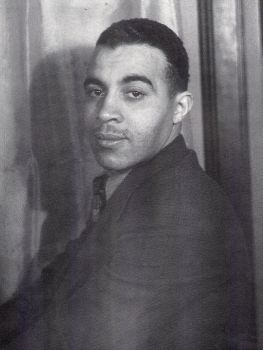
So what is an example of Harlem Renaissance literature that does not center the straight audience? Enter Richard Bruce Nugent and his short story, “Pope Pius the Only” (1937). While not as queer in content as the other two stories we are examining, “Pope Pius the Only” is nevertheless an invariably queer text. This is in part due to its author; Nugent was one of the only openly gay writers of the Harlem Renaissance, and his style of writing is a reflection of that—he indulges in his writing, leaning into the transgressive ideal of decadence throughout the story.
As the main character, Algy nebulously travels through turbulent points of Black history, he is constantly running across symbols of so-called social depravity; he smokes reefers, he jives, he laughs at a gathered white mob (Nugent 438). The scene is crowded in every sense of the word, stuffed with excess, centuries of history, and revelry confined to four pages. In an environment like Harlem at the time, in which the politics of respectability were a war being fiercely waged, this story brimming with decadence can only be taken as a deeply stubborn political and sexual act. It ties itself to a history of decadence as queerness—even the protagonist’s name, Algy, is “likely a reference to Oscar Wilde’s ‘Algy,’ or Algernon Moncrief from the play The Importance of Being Earnest (1895)” (Tracy 161). With Wilde, a pioneering force of both queer and decadent literature, at his back and the style of decadence pouring out of him, Nugent is loudly insistent of his queerness throughout “Pope Pius the Only”.
The short story also ends in death like the other two we have examined. In fact, the entire story is submerged in death; the story opens with Algy being burned alive, and some of the final lines, “And it burned—the chains at his wrist were white hot now” (Nugent 438), bring that image of lynching back to the forefront. However, despite the closeness with both queerness and death, “Pope Pius the Only” does not force Algy into the role of the tragic queer figure—in fact, the entire text is a sort of middle finger to that role. The difference is found in the tone of the piece. While the other two pieces are deeply preoccupied with the tragedy of the deaths they portray, Algy and the narrative as a whole view his death in an indifferent and almost flippant way. It bores him—“Algy thought, ‘how needlessly painful, how annoying,’ and turned over to sleep through the lynching” (Nugent 438). This reflects a queer indignation at the relegation of queerness to the genre of tragedy—Algy isn’t only flamboyantly dismissing his own contrived death, but the contrived nature of all Black and queer people sentenced to death for existing in literature. This is the anger wrapped in the camp of the queer audience—this is the story that rejects what is palatable to the straight reader and fulfills its promise of queerness.
Through these three authors and their works, we see the thought of audience and respectability repeated constantly. All three are queer stories—they utilize queer code, they discuss queer people, they are written queerly—but just because each utilizes the language of the gay community does not mean they are all addressed towards that community. Hurston’s “John Redding Goes To Sea” uses queer subtext but utilizes the tragic queer figure trope, failing to challenge the status quo of relations between sexualities in a meaningful way and therefore preserving a straight audience. Grimké’s “The Closing Door” is more complex in its use of death and tragedy, but ultimately falls into the same trap given the easy conflation of white audiences with heterosexual audiences. Only Nugent’s “Pope Pius the Only” is fully turned inward to find its audience, scorning the tragic tropes that redeem queer literature in straight readers’ eyes. All three pieces are important works of queer literature, and all three “come out” in their own ways, but to whom? It is that question of audience, of exteriority and interiority, that truly gives them their roles to play.
Bibliography
Chauncey, George. Gay New York: Gender, Urban Culture, and the Making of the Gay Male World, 1890-1940. Harper Collins, 1994.
Christa, Schwarz A B. Gay Voices of the Harlem Renaissance. Indiana University Press, 2003.
Gable, Craig, and Angelina Weld Grimké. “The Closing Door.” Ebony Rising: Short Fiction of the Greater Harlem Renaissance Era, Indiana University Press, Bloomington, IN, 2004, pp. 12–30.
Gable, Craig, and Richard Bruce Nugent. “Pope Pius the Only.” Ebony Rising: Short Fiction of the Greater Harlem Renaissance Era, Indiana University Press, Bloomington, IN, 2004, pp. 435-438.
Hulon, Haley. “Bury Your Gays: History, Usage, and Context.” McNair Scholars Journal, 2017, pp. 17–27.
Hurston, Zora Neale. “John Redding Goes to Sea.” Narrative, 2016, pp. 1-15.
Tracy, Ryan. “‘To Work Black Magic’: Richard Bruce Nugent’s Queer Transnational Insurrection.” JAm It!, 27 May 2019.
Wright, Richard. “Between Laughter and Tears.” New Masses, 5 Oct. 1937, pp. 22–25.

