Skylar Kirby
Throughout the span between Langston Hughes and Vida Cross’s writing, there has been a shift in the cultural attitude towards language. I will be looking into the differences and similarities between how Vida Cross and Langston Hughes use their cities, their times, and their language. Hughes became a household name via his poetry, using African American Vernacular English (AAVE) in his writing to bridge a gap between Black readers and the way that poetry had been presented in the past as being solely for those who were “educated”. AAVE is a dialect of English that can be traced back to slave descendants (Wheeler 365). Hughes writes in his essays about class and racial distinctions, and indicates the division that class provides to the Black community as being harmful (Peddie 39). Cross later takes inspiration from Hughes and other artists who used Black culture in similar ways at the time, such as Archibald J. Motley Jr. She also uses her own experiences living as a Black woman to inspire her work and put her ownwork out there using similar inspirations.
Through the use of AAVE in poetry, both authors bring attention to racial issues and how dialects of English that are typically associated with Black people are often seen as Standard English with “mistakes” (Wheeler 365). Much of Hughes’ focus in his writings, both in The Weary Blues and in other poems and essays, included “nuanced means of examining racial and social oppression” (Peddie 41), and brings to mind a sense of familiarity. I have never been to Harlem, but somewhere between the lines of Hughes’ poetry, I am reminded of family gatherings and my grandparents. It’s experiences like this that show how important the language used is; I heard all of these words growing up and now get to see them as art. Like they belong somewhere.
Modernist poetry can be identified in a few different ways. Within the poetry of Langston Hughes and Vida Cross, there are a few clear examples of modernist techniques; imagism, free verse construction, and the use of AAVE can be found within their poetry. Imagism as a whole values “clarity, compression and precision” (Jones 1147) as key concepts, and these concepts are visible in the work of both authors that I am discussing.
While modernist poetry as a whole takes a step away from the language that was previously used in poetry, that touted classical education and fanciful words, some Black poets at the time started to use AAVE in their work. Often, AAVE can be familiar to an audience when hearing it spoken, but they might have trouble working out the way that it is spelled on a page (Devereaux 93). When poets use this language in their poems, it breaks down some of the walls that surround poetry as a concept. Black communities that read works by these poets can feel that sense of familiarity, seeing the language that they use regularly published onto the page. “Standardized English is the variety used by businesses, education, and the government” (Devereaux 97), and this association of education and standard English can cause a divide between people who don’t use this language in their everyday lives. AAVE has been seen as improper, and riddled with “mistakes” (Wheeler 365). For this to show up in poetry designates a step away from the language that was historically used in poetics. In school settings, even present-day, when Vida Cross is writing, AAVE is typically seen as incorrect Standard English over its own dialect. Students will be corrected for writing and speaking in the way that is familiar and natural to them (Wheeler, 369-70).
By having this dialect be represented in poetics, especially a name as well known as Langston Hughes, it can create a shift in the ways that Black people and AAVE are regarded. At the time of the publication of The Weary Blues, there was a large consideration of race and representation of the Black community (Brown 276, Peddie 40). At the same time as the book was being published, he wrote an essay in which he acknowledged the potential separation of one from “the beauty of his own people” (Peddie 40).
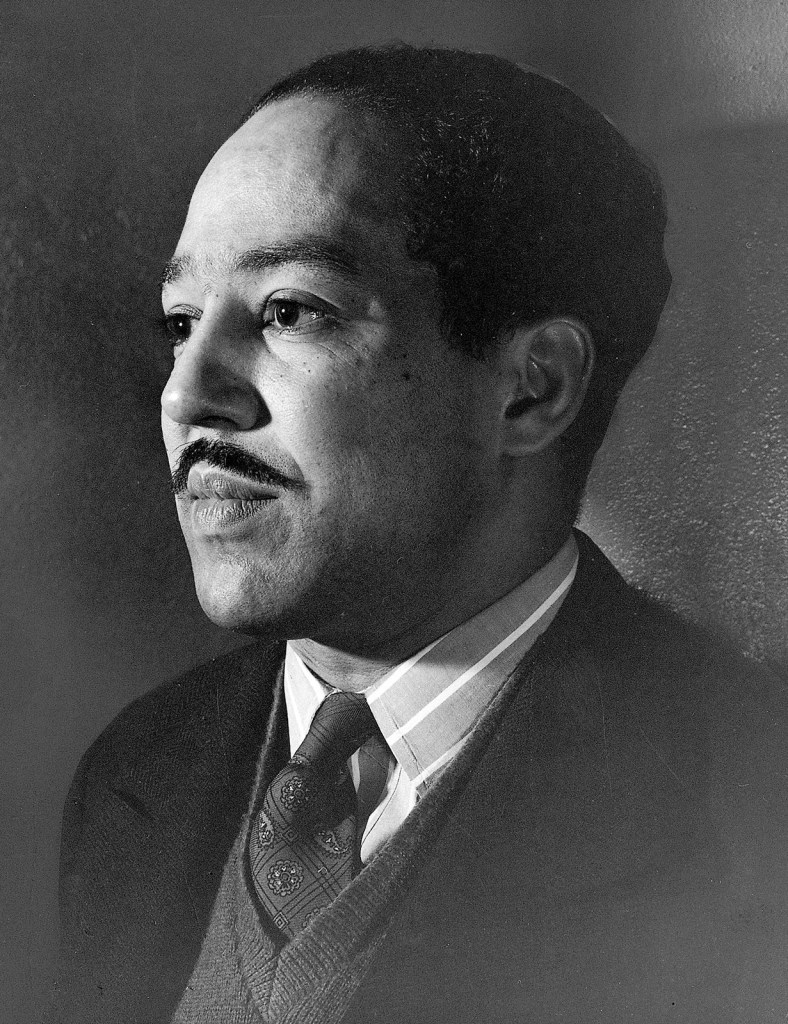
One of the most memorable names in the modernist movement, Langston Hughes was the first Black poet to fully support himself through his writing (“Langston Hughes”). Hughes, born in 1901, wrote in Harlem during the Harlem Renaissance.
He took inspiration from the blues (Komunyakaa 1140), which is evident in the energy and language of his work, with poems such as “The Weary Blues” and “Blues Fantasy”. Many poems have a noticeable beat and pattern to them that allows the book itself to have that blues feeling that Hughes himself spoke of. In different poems he uses rhyme, syllable count, or repetition to create a pace in the poem that sticks with a reader, or even interstitial lines, such as “Hey! Hey!” (Hughes 37) to give a sense that there are people singing in the background.
When taking away AAVE from schools and education, it can deprive students from “pride and confidence in their identity” that they expressed when able to use AAVE (Hill 121).
With that sentiment in mind, having a character in a play that Hughes wrote have an “inability to recognize the solidarity of the black community” (Peddie 40), reflects back into how creating that community and confidence is so important for the Black community. This is evident in Hughes’ “Poem”:
“The night is beautiful,
So the faces of my people.
The stars are beautiful
So the eyes of my people.
Beautiful, also, is the sun.
Beautiful, also, are the souls of my people.” (Hughes 58)
This poem in particular stood out to me because the love and uplifting of Black people that Hughes writes with is reminiscent to me of how I was raised. My grandfather especially did everything he could to steep me in Black culture and that same love. Allowing for Black culture to be in media, and by someone as successful as Langston Hughes, gives a framework for people like me to grow up with.
In Hughes’ poem “Harlem Night Song”, the reader can see other modernist techniques shaping the poem. Though this poem leans more towards Standard English, the shape and imagery give it a modernist feel. There’s a mirroring of the phrasing of
“Come,
Let us roam the night together
Singing,
I love you.” (Hughes 62)
at the end of the poem, where the declaration of love comes before the rest. The poem contains vivid imagery of the night sky and the Harlem skyline. It created a comfortable feeling in the way that AAVE is known to do, but in a different way. “Harlem Night Song” reflects a lot of what it is to experience Harlem at night, and the feeling of love that matches the declaration in the poem seems to radiate off the page. The rhyme scheme itself draws attention to the line.
In another example, “The Weary Blues”, the titular poem of his book, The Weary Blues, Hughes has a clear feeling of blues. Alongside the quotes he has from a blues song, Hughes has a blues feeling in the descriptive lines. Lines such as,
“Ain’t got nobody in all this world,
Ain’t got nobody but ma self.
I’s gwine to quit ma frownin’
And put ma troubles on the shelf.” (Hughes 23)
give the poem a very distinctive feel, one that Komunyakaa refers to as “a jagged lyricism” (1141). Very similar to how other modernist poems are shaped, Hughes uses many short lines in his poems. This helps the rhymes feel more impactful, because each one is more in-mind to create a beat. Of course, Hughes has imagistic qualities in this poem. In the narrative lines that are not quotes of the blues being sung, Hughes describes “ebony hands on each ivory key” and “the pale dull pallor of an old gas light” (23). These clear images help to add to the blues feeling of the poem.
When looking back at the Harlem Renaissance and Black culture at the time, there’s an assumption of “Harlem as the bastion of black culture”, despite the fact that there has never been one place regarded as such by the Black community (Peddie 38). Bronzeville at Night: 1949 draws away from this. Motley’s painting depicts a scene in Bronzeville (a Chicago neighborhood, referred to as such “to represent blackness” (Blood)) celebrating Black culture, the Harlem Renaissance, and urban life at the time (Conger). The book itself was published in 2017, though Cross’ work continues on the same feelings within her poetry.
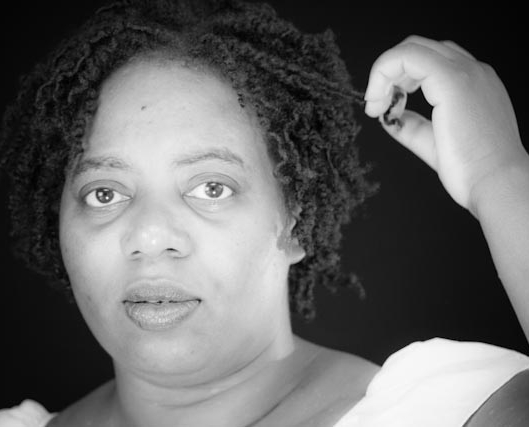
Cross takes a similar stance as Hughes with her work; turning Black people and Black culture into art. She also draws on Black artists as much of her inspiration, such as Archibald J. Motley Jr., whose painting Bronzeville at Night serves as the title inspiration and cover art of her book, Bronzeville at Night: 1949. She attributes Langston Hughes himself as inspiration for many of her poems within the book, and dedicates certain poems to him.
Cross’ poetry has a similar feeling to that of Hughes in the construction of “Boogie-Woogie in Bronzeville”, for which she listed Langston Hughes as inspiration. The first section of the poem reads:
“Hey
ain’t you heard?
The cops went Bop-pop-a-re-bop
over what’s-his-name’s head
Beating out, beating out
till he almost dead” (Cross 15)
Her use of shorter lines, the rhyme scheme, and the beat in the syllables calls Hughes’ lines to mind. With this in mind, it’s important to recognize that Cross’s inspirations span further than Hughes and Motley, but also her time in Bronzeville and Black culture as a whole. Her goal “to capture blues humor and pain” (Blood) shines through in the imagery used in “Boogie-Woogie in Bronzeville”, and continues throughout the rest of the book.
This is also where Cross’s work draws another similarity with Langston Hughes: the discussion of racial issues. Police violence against people of color, especially Black people, is particularly prevalent in majority Black communities. In “Boogie-Woogie in Bronzeville”, its front and center indicated how normalized these occurrences are. The narration of the poem dismisses the identity of the victim, and the casual nature of “ain’t you heard” (Cross 15) immediately dismisses any weight that would be put onto the rest of the section’s words. Furthermore, there’s a dismissive nature in the rhythmic way that the beating is portrayed. Ending the section of the poem clarifies that there was almost a murder that has been consistently downplayed. This is the reality of the situation. Police violence is so common that people become desensitized to it.
The sixth section of “Photographs” highlights how Cross centers Black people in her poetry, with how she describes “A Close up of Daddy” simply as “The smooth color of skin / no visible ending” (Cross 54). There is not more that needs to be said. The color of skin is such a prevalent factor in racial violence, but Cross focuses, rather, on the beauty of it. And, lest one be likely to forget what the color of skin here is, the poem sits across the page from “The Night” in which Cross focuses on blackness, of cars, of people, of the night. The black man in the poem is aware of this comparison to some extent, as
“He figured he was
invisible
too dark
too drunk
to be seen” (Cross 56)
Cross’ repetition of “too” – used here for its meaning of ‘in excess’ – and finishing with “to be” causes the reader to fill in the line as “too seen”. Though the man in the poem believes that he would blend in and go unseen, there is a hypervisibility of Black people that forces them to too often be the subject of debates, particularly those about equality or during arrests. But he isn’t, in this poem. Once again, the Black man is simply poetic.
Bronzeville and Harlem play similar roles between the two books, serving as a backdrop that stays consistent throughout, as well as a place and explanation for the characters present in the poems. Though Harlem is the better known between the two, in fact the movement of the time is referred to as the Harlem Renaissance, Bronzeville was still an important center at the time that provided a similar center for Black people to have community and express themselves. The dialogue that characters in Bronzeville at Night: 1949 use mirror the use of AAVE in narrative lines in other poems, such as in “The Witchdoctor”, where the witch doctor himself says “Man / why’on’t you go somewhere” (Cross 7). It normalizes AAVE into parts of speech, which firstly demystifies the dialect as something other, and brings it back into familiarity (Devereaux 95). Further, it creates a tie between the different poems in the work and brings Cross herself as the narrator into Bronzeville with the characters that she is writing about. As she said herself inan interview with Liz Blood, most of the characters in the book are based upon people depicted in Motley’s Bronzeville at Night, with influences from people that she herself knew in her life (Blood). Harlem, in The Weary Blues, has a similar use of the location. The city itself seems to be an active character in the poems, imbued with the sounds of Jazz, the sights of city roof-tops, and the people of Harlem itself (Hughes 62, 103). The cities wouldn’t be what they are (perhaps two bastions of Black culture out of many, rather than the implication that Harlem is the only) without the people that inhabit them, and the people wouldn’t be who they are without the cities. It’s a back-and-forth exchange that is well documented within this poetry.
Throughout both of these books, Cross and Hughes embed Black people into their poetry. The ways that AAVE are used and showcased in a positive light in the poetry of Cross and Hughes can create a sense of rightness for Black people that reflects back onto children and adults today in a positive way. Community is important, as is evidenced by the prevalence of the “Black community” being such a common turn of phrase, as opposed to “white community”. Having language that is familiar is such a key component of being a community, and Black poets make this a more reachable standard.
Bibliography
“Archibald Motley’s Bronzeville at Night”. Peoria Riverfront Museum. pars. 1-4,
Blood, Liz. “Interview with Vida Cross.” Awst Press. https://awst-press.com/news/interview-with-vida-cross. Accessed 25 October 2024.
Brown, Sterling A. “The American Race Problem as Reflected in American Literature.” The Journal of Negro Education, vol. 8, no. 3, 1938, pp. 275-290.
Byrd, Diane, et al. “A Modern Doll Study: Self Concept”. Race, Gender, & Class, vol. 24, no. 1-2, pp. 186-202.
Cross, Vida. Bronzeville at Night: 1949. Awst Press, 2017.
Devereaux, Michelle D., and Wheeler, Rebecca. “Code-Switching and Language Ideologies: Exploring Identity, Power, and Society in Dialectically Diverse Literature.” The English Journal, vol. 102, no. 2, 2012, pp. 93-100.
Hill, K. D. “Code-Switching Pedagogies and African American Student Voices: Acceptance and Resistance”. Journal of Adolescent & Adult Literacy, vol. 53, no. 2, 2009, pp. 120-131.
Hughes, Langston. The Weary Blues. Alfred A. Knopf, 1926.
Jones, Meta DeEwa. “Listening to What the Ear Demands: Langston Hughes and His Critics.” Callaloo, vol. 25, no. 4, 2002, pp. 1144-1175.
Komunyakaa, Yusef. “Langston Hughes + Poetry = The Blues.” Callaloo, vol. 25, no. 4, 2002, pp. 1140-1143. “Langston Hughes”. The Poetry Foundation. Poetry Foundation, par. 5. https://www.poetryfoundation.org/poets/langston-hughes
Peddie, Ian. “”There’s No Way Not To Lose”: Langston Hughes and Intraracial Class Antagonism.” The Langston Hughes Review, vol. 18, 2004, pp. 38-55.
Rampersad, Arnold. “Langston Hughes and his Critics on the Left.” The Langston Hughes Review, vol. 5, no. 2, 1986, pp. 34-40.
Wheeler, Rebecca, and Thomas, Julia. “And “Still” the Children Suffer: The Dilemma of Standard English, Social Justice, and Social Access”. JAC, vol. 33, no. 1/2, 2013, pp. 363-396.

