J. Porter
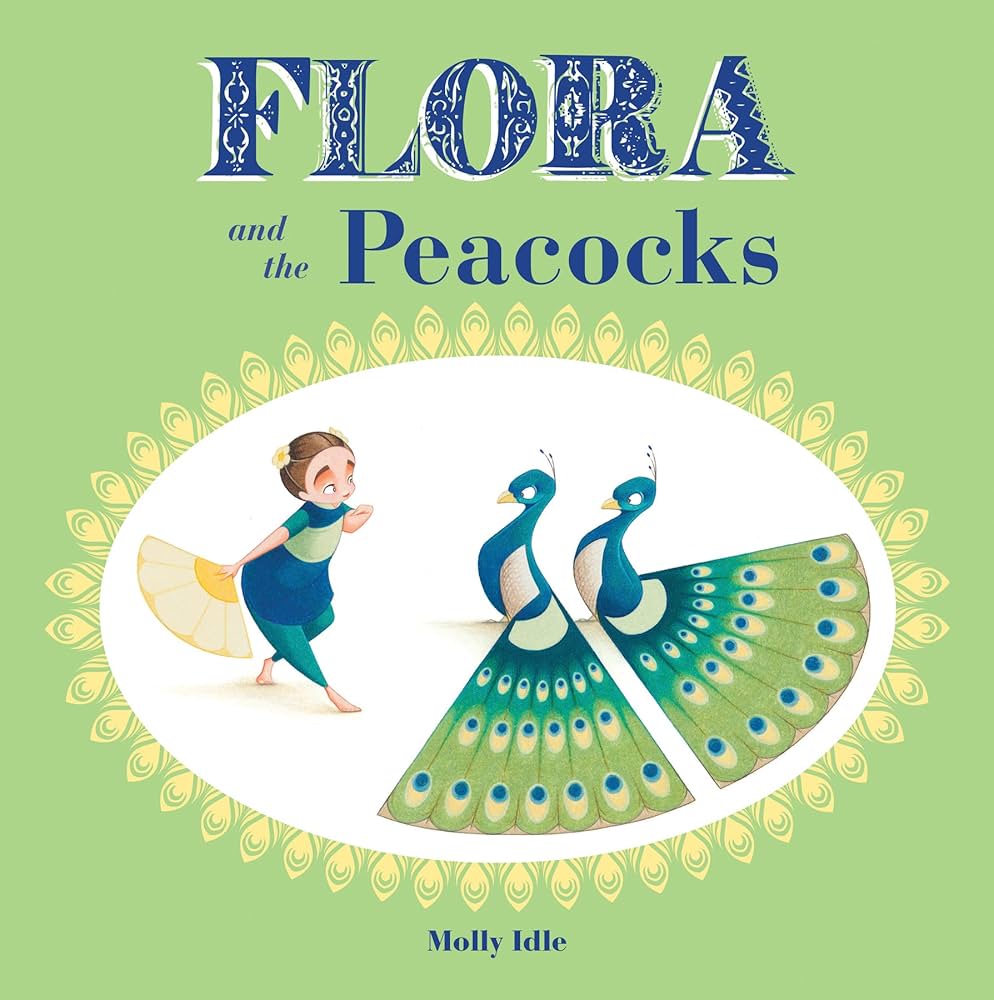
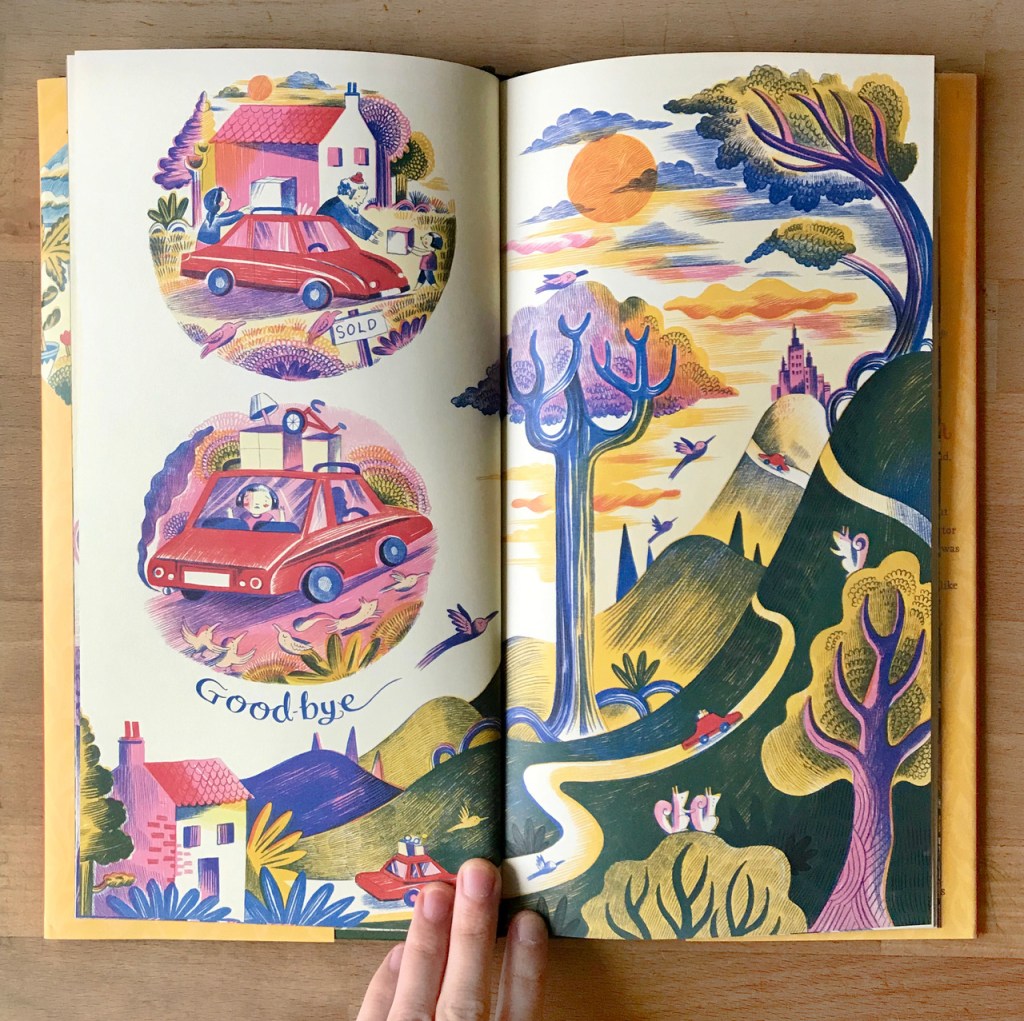
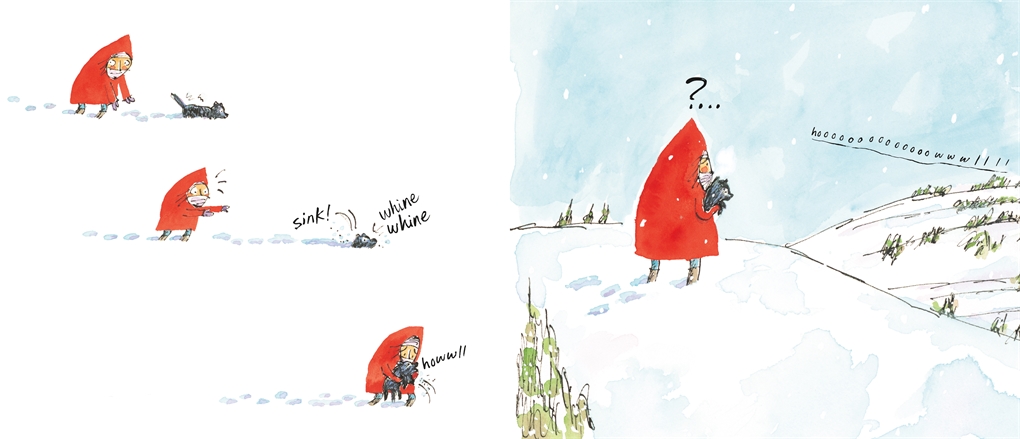
Over the summer of 2024, I worked as a youth services librarian. Part of my job was constantly reading and vetting picture books to show to the children who would attend my storytimes. There are three books that stuck out to me as consistently engaging for students: Flora and the Peacocks by Molly Idol, Wolf in the Snow by Matthew Cordell, and The Balcony by Melissa Castrillon.
Along with being beautifully illustrated, these books are unique compared to most because they don’t have any words to tell the story; the reader and students must work together to find the narrative in each book. While picture books are an expected part of preschool and kindergarten curriculum, wordless picture books have only recently begun gaining attention within children’s librarian circles. Based on my experiences interacting in classrooms with early readers, I believe that picture books are the perfect combination of entertainment and education for young readers in the classroom. I am a big believer that picture books are a strong foundation in building reading, writing, and critical thinking skills for early readers, so long as they are used to facilitate discussion. Having classroom mentors participate in “read-alouds,” where a teacher or other mentor reads to a group of children and facilitates discussion, is proven to be helpful for initiating early literacy and expanding vocabulary (Ladson-Billings 165-167). In classroom settings with students coming in from a wide range of experiences, student-centered discussion of a class text not only makes a teacher more aware of their students’ progress, but also increases the overall understanding in the classroom. While possibly contradictory, I argue that wordless picture books set students of all backgrounds up with reading skills more than simply reading to a classroom. I have experienced first hand the power that wordless picture books can have when interacting with learners of all backgrounds, and will argue that they should be seen as a vital resource for student-centered discussion in English as a second language (ESL) classrooms and classes with a diverse range of dialects.
A good class discussion using a wordless picture book requires an engaged and active reader. In order to prepare for a class conversation expecting different possible interpretations students may have of a book, the teacher must know how to “read” one aloud. Wordless picture books when read aloud are designed to ask a series of questions to students with the end goal of sharing experiences and crafting their own narratives.
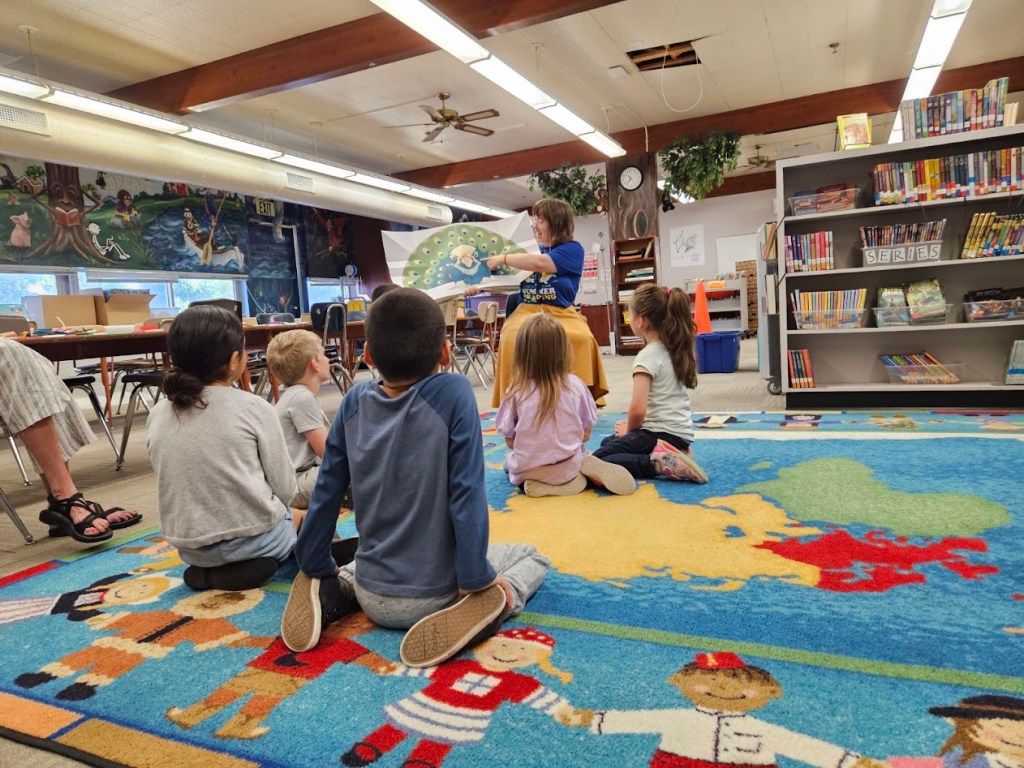
They utilize exaggerated emotions and clear character actions to make up for the fact that there is not a narrator describing the plot and emotions felt. They are typically more simple in story and detailed in visuals with the intention that children and readers will be discussing while the book is being read. They depict commonly shared human experiences that are universally recognized regardless of age, language, or background. This shared experience becomes very important when talking about uniting a diverse classroom, especially when the teacher doesn’t share the same identities as their students, which I will address later in this paper.
Student-centered discussions that emerge from storytime act as introductory versions of the classroom strategy, “think-alouds.” Daniels and Zemelman, authors of “Subjects Matter: Exceeding Standards Through Powerful Content-Area Reading,” define the purpose of think-alouds as having the teacher demonstrate the act of reading as thinking in order for their students to mirror. In this strategy, the teacher reads aloud a passage to their class and audibly dictates their notes, thought process, interests, and confusions (Daniels and Zemelman 94). Think-alouds are the next developmental leap for students after “read-alouds,” which is just the act of reading out loud to a student. Picture book readings are inherently read-alouds, meaning they are in the developmental line to think-alouds. Since there are no words to read aloud in a wordless picture book, the class and teacher must transition ahead to the think-aloud process, just on a smaller developmental scale. “A football coach doesn’t sit on the bench and talk about how you might block an opposing lineman—he stands up, grabs your body, puts you in the correct position, and shows you how to move” (Daniels and Zemelman 94). In these mini think-alouds, I found the best way to engage the class was to chime in with my own interpretation of the narrative, of course being careful not to speak over a student eager to share. The questions I prepared while reading these books aloud all had to do with analyzing the story being presented, and asking the class to draw from their own experiences and bring in their own interpretations. Wordless picture books are designed to instigate a conversation between students, with teachers being able to comment to help propel the discussions forward. The intended effect is that after students gain the skills required to think critically while reading picture books, they will be able to check-in with themselves while developing further literacy skills. After they see it modeled by the teacher and their classmates in group discussions, they will be able to do it on their own.
While it is the role of the teacher to facilitate the topic of conversation that takes place during storytimes, the discussion is ultimately student-led and interest-driven. In my experience students always connect more with each others’ stories and experiences than adults’ perspectives, even if the students come from different backgrounds. For example, a kids book about cowboys may use the word “lasso,” which may only be a familiar concept for students in a rural environment.
If the word is printed on the page and a student expresses confusion, it gives the teacher a chance to explain what it is. However, in a wordless picture book, the conversation may be directed more into what the students believe that tool could be used for based on context. The conversation then becomes, “what would you do with this thing if this was your goal?” This may seem like a reach to expect students still operating at a kindergarten reading level to answer such a complex question, but it is important to give students invitations to think past what they are expected to. They may surprise a teacher by making the stretch connection, or better yet, help each other make the connection. If a student in the group is familiar with the concept of a lasso, it gives them a chance to demonstrate their knowledge and experience with it, and then teach their peers. However, if the group can’t come up with an answer or remains confused by the question, it reaffirms to the entire group that confusion is a valid and necessary part of learning. The teacher then explains the concept and the purpose, leading students back to the explanation of the word that would’ve been the first instinct of a teacher reading a picture book with words. These discussions don’t require that everyone shares a similar background, and in fact function best in situations where the group being read to shares different cultures, perspectives, languages, and dialects (Bode and Nieto 5). If a child raised in a multilingual household makes a connection that a child raised in a monolingual household wouldn’t have made, it encourages cross-classroom education.
Using wordless picture books invites students who speak with other dialects or variants aside from WME (White Mainstream English) into classroom discussions using the form of communication they are most comfortable with. Anything written using words, even a kids book, is done in a specific dialect because the writer inherently speaks with a dialect. Incorporating storytimes without words into classroom learning is a great way to introduce critical reading skills into a classroom while allowing total freedom of expression in language. Wordless books are a unique reading tool teachers can use where the dialect of the author is not an influence on the students reading it. If a teacher and a group of students share a dialect or variation of English, the voice of the book can be shared in whatever method of communication best fits the group as a whole. This works even if the author does not use that dialect because of how malleable narrative voice is in wordless picture books. The book works to meet the readers halfway to ensure communicative efficiency in its storytelling.
Storytelling in America is dominated by WME across all media for all ages. April Baker-Bell has written extensively about the educational dissonance specifically Black children feel in classrooms that are taught, by default, in WME. Many of these children grow up speaking another variation of English that is often ignored or punished in schools; Baker-Bell uses the term Black Language (BL) to describe the linguistic traditions that Black families use with each other. If a child only speaks using BL at home, and learns in a school fully conducted in WME, they will start to associate code-switching with learning as a concept. The lack of dialectical diversity in a classroom implies that in schools, there is a single style of “standard English;” more often than not, this learned standard illustrates to a child of color from a young age that in order to participate at school, they must “talk white” (Baker-Bell 5). If a teacher has a group of students who all speak in BL, it would be detrimental to the goal of effective communication not to encourage BL in the conversation shared by students, regardless of whether the teacher is a speaker or not. While there are supporters for the idea of a universal academic language, such as Stanley Fish (Savini 2), I fear that in the pursuit of assimilation, the system runs the risk of subconsciously telling students that their identities are not welcome in a place of formal education. Even for early readers, picture books with words can showcase universal shared experiences, but there is no way for them to showcase a dialect that matches every students’ experience. Some students may even feel that a book simply was not written for them to interact with. If other students are able to easily participate in the conversation without “switching” to the language the book shares, then it may subconsciously encourage students to develop academic code-switching before they’ve even learned how to read (Baker-Bell 1). It is imperative to assert to children of all manners of speaking that their unique voice does not make their ideas any less or more valuable than anyone else’s.
This process becomes more complex in a classroom where multiple dialects are spoken at once. It is easy for teachers to become accustomed to WME in the face of interacting with multiple students who all use language differently.
However, I believe the goal of read-alouds in education should not be to teach students how to communicate within a standard, but to learn from each others’ experiences. Teachers of diverse classrooms must facilitate understanding while also encouraging everyone’s unique perspective, feedback, and language. Sometimes, this may involve ensuring communication is reached across students by pausing and reflecting on the points made in discussion, but teachers should above all else not make a child feel like they have to change the way they contribute to a discussion for the sake of someone else.
ESL (English as a second language) students are even more at risk of feeling like picture books were not written for them in mind because of the language barrier. Books in English are meant for an English audience. No matter how accessible a book may be, an English picture book signals to a class that comprehension and learning are directly tied to the ability to read in a language. While the goal of an ESL teacher is to teach English, it should not be implied to a student that their education can’t begin until fluency is gained. While some picture books feature two or more languages, most do not, and therefore wordless picture books offer an amazing alternative to traditional picture books.
I grew up around a lot of ESL students, most of which were not from the US. I can’t speak to the experience of what it was like to be an ESL student or what type of learning benefits those students, but I can reflect on the fact that our classes were practically segregated until those students were able to “keep up” with their EFL peers. Williams points out in her essay “Classroom Conversations” the danger of telling ESL students that they are constantly lagging behind. “It is imperative that we work from our students’ strengths instead of viewing their English language and academic abilities in terms of ‘Can they keep up with the native English-speaking students?’” (Williams 755). Using wordless picture books is a way to encourage students to express themselves in their native tongue without the expectation that they are expected to catch up. Because wordless picture books tend to rely more heavily on direct, exaggerated depictions, they allow ESL students to share in communication even if they are not fluent in English. All students are encouraged to express their thoughts in student-centered discussions, and the teacher should clearly state to their class that students’ native languages can be used in the discussion if they can’t clearly define their thoughts in English. The teacher’s role should be to assist the student in translating their observation to the rest of the class, and since picture books usually portray simple shared human experiences, the goal of class-wide understanding despite language barriers can be achieved.
Teachers can also use other languages to model radical acceptance during storytime. If a teacher asks their students what they think a character is feeling on a page where the character fell off their bike, and a student answers “hurt,” then you can direct the question outwards again and ask if anyone knows another word for ‘hurt’ in a different language. The teacher must maintain excitement about the sharing of other languages in the classroom. This strategy works best when the teacher has an example on hand, in case no students are eager to share. For example, a teacher who may only know English can memorize the words for basic emotions in Spanish. They would then tell their students that ‘hurt’ in Spanish is ‘lastimado,’ and ask the class to repeat this word together. The teacher’s modeled interest in learning about other languages creates an environment where ESL students feel that their unique cultures, perspectives, and experiences are important and worth sharing with the class. However, the teacher must not call out a student to answer a question just because they speak another language. The teacher must respect that multilingual students may still be hesitant to share or are prioritizing comprehension over voicing the answer.
Wordless picture books also encourage students who are struggling with English but aren’t ESL. Maria Nichols, an early education scholar, shares a story from her experience as an elementary school teacher about Thomas, an EFL student who struggled with communication because he was taught English by his ESL mother. Nichols adds the detail that Thomas always paid full attention during read-alouds of stories, but his confusion would only become evident in discussions afterward with the teacher. While picture books can’t magically create fluency, one of the purposes of wordless books is making sure every student is on the same page with every question asked. If Thomas was a student in a class using wordless picture books, potentially he would’ve been able to share his ideas and be affirmed that they were valued while also signaling to the teacher to work with him more on building literacy skills.
American education by and large operates under the goal of teaching English for academic purposes, and therefore heavily relies on “known-answer” questions, also known as the Initiation-Response-Evaluation model. Most of the class-wide conversations I participated in during elementary school were rooted in known-answer questions, meaning that the teacher would ask a question expecting one specific answer, and the student who voiced that answer would be correct. I side with William’s argument that the known-answer model limits discussion for all students, but is especially harmful for ESL students (753, 755). There are ways to ask a known-answer question during a read-aloud, and while it isn’t a bad way to check that students are all on the same page, they should be kept to a minimum. An example of a known-answer question in a picture book could be “what does this word say?” or “is this person happy or sad?” Both of these are asked with the expectation of a “correct” answer. These types of questions can be extremely helpful if your class needs to focus on a keyword, but should not be the default question used in picture book readings. A more open question could be asking “what is this character feeling right now?” or “have you ever related to this?” The most important step after asking a more complex question is to wait for everyone to think of their own answer. If an eager student shoots their hand up, give a few more moments to accommodate other students who need more time to collect their thoughts. This pause gives all students the chance to be engaged with the narrative.
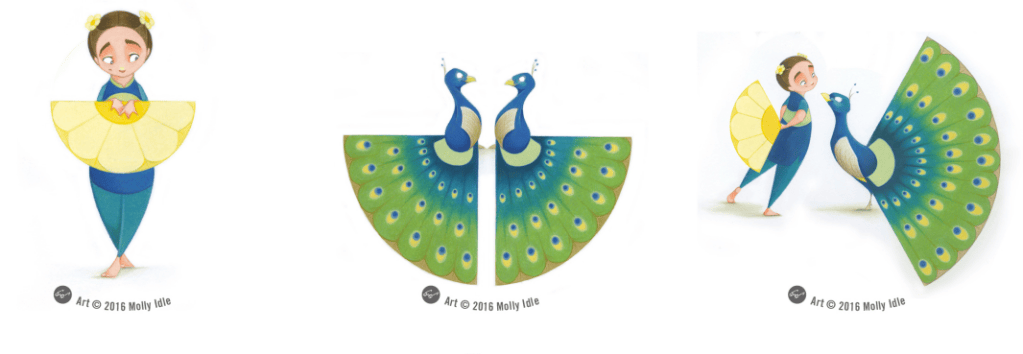
Wordless picture books have the ability to change a simple read-aloud into a full-fledged celebration of different identities; it all depends on if the teacher is willing to initiate that discussion. As long as the teacher reading respects the different dialects, languages, and other differences in communication, this strategy can go a long way in promoting classroom conversations. I have always gravitated towards wordless picture books, and enjoyed reading these stories more than any other to a group of students. The access these books create not only encourages students of varying backgrounds to participate, but also makes the role of the teacher more engaging. When I read these books out loud, I never knew what the kids were going to say next, which directly contrasts the known-answer model I was exposed to all my childhood. One of the goals teachers should strive for in early reading is radical language and dialect acceptance, and wordless picture books are a great resource to ensure that students know their individual voices are valued in the classroom.
Bibliography
Baker-Bell, April. “Black Language is Good on Any MLK Boulevard.” Linguistic Justice. 1st ed., Routledge, 2020, pp. 1-10.
Bode, Patty, and Sonia Nieto. “Setting the Stage: Multicultural Education Within a Sociopolitical Context.” Affirming Diversity. 6th ed., Pearson, 2012, pp. 2-41.
Daniels, Harvey, and Steven Zemelman. “Teacher Modeling: Think Alouds.” Subjects matter: exceeding standards through powerful content-area reading. 2nd ed., Heinemann, 2014, pp. 94-97.
Hammerberg, Dawnene D. “Comprehension Instruction for Socioculturally Diverse Classrooms: A Review of What We Know.” The Reading Teacher, International Reading Association, vol. 57, no. 7, Apr. 2004, pp. 648-658.
Ladson-Billings, Gloria. “‘Yes, but How Do We Do It?’: Practicing Culturally Relevant Pedagogy.” City Kids, City Schools: More Reports From the Front Row. 1st ed., The New York Press. 2008, pp.162-177.
Nichols, Maria. “Comprehension Through Conversation.” 1st ed. Heinemann, 2006, pp. xi-25.
Savini, Catherine. “10 Ways to Tackle Linguistic Bias in Our Classrooms.” Inside Higher Ed, 26 Jan. 2021, insidehighered.com/advice/2021/01/27/how-professors-can-and-should- combat-linguistic-prejudice-their-classes-opinion. Accessed 8 Oct 2024.Williams, Joan A. “Classroom Conversations: Opportunities to Learn for ESL Students in Mainstream Classrooms.” The Reading Teacher, International Reading Association, vol. 54, no. 8, May 2001, pp. 750-757.

