Eliza Farley
In this paper, I will discuss literature’s ability to morally influence us, and consider the ways in which this phenomenon contributes to arguments regarding banning works of children’s literature. I will examine arguments from Martha Nussbaum, Laura D’Olimpio, John Holden Bickford and Devanne Lawson, Emily Neville, Kris Goffin and Stacie Friend, and Susan Fanetti, to explore the ways in which literature can morally influence us, and to argue that children should have opportunities to learn about intense subjects from well-written and age-appropriate material.
Though some books have been banned for unusual reasons, most of the themes that provoke bans are those which society deems controversial, such as sexuality, racial diversity, queer relationships and identities, and other examples of self identity and self-expression that fall outside of the gender binary. Below are three examples of recently banned children’s books, and the justifications behind their bannings:
- Sex is a Funny Word by Cory Silverberg and Fiona Smyth. In 2023, members of the Idaho Liberty Dogs and the Concerned Citizens of Meridian spoke out against Sex is a Funny Word during a Meridian District Library’s board meeting. They referred to the book, which is a comprehensive and inclusive guide to sex education geared towards children, as “smut-filled pornography.” Sex is a Funny Word has been banned, challenged, and relocated since 2018. The reasons for these bannings include the book’s queer content, its discussions of gender identity, and its “inappropriate” title and illustrations (Titus 2023).
- Sulwe by Lupita Nyong’o. In 2022, after parental complaints, the Northampton (Pennsylvania) Area School District school board unanimously voted to table a donation of dozens of books from The Conscious Kid, a non-profit organization focused on promoting equity and healthy racial identity development. Among these books was Sulwe, which tells the story of a little girl who struggles to see her own beauty because her skin is darker than others around her. Parents called the books donated by The Conscious Kid divisive, socialist, and racist. The Superintendent of Schools, Joseph S. Kovalchik, noted that there has been a significant increase in teachers fielding questions from students about the environment, race, immigration, bullying, and historical figures with diverse backgrounds. He claims, “the staff is struggling with having those conversations and providing the resources for those students of a diverse background, to assist them with their concerns” (Titus 2022).
- Sparkle Boy by Lesléa Newman. In 2022, an online petition was directed to the superintendent and board of the Novi (Michigan) Community School District protesting the inclusions of “sensitive materials topics.” These “sensitive materials” were defined as gender identity, sexuality, and ideological activist behaviors. Among the list of challenged books was Sparkle Boy, a book about acceptance, respect for others, and having the freedom to be yourself. Similarly, in 2020, in Oak Park, California, the Superintendent of the school district announced to parents the introduction of a gender identity curriculum for elementary schools, which included Sparkle Boy. The new curriculum sparked protests from about 300 parents. Some claimed that the lessons were “unscientific ideology,” while others argued that the parents should decide whether to broach these subjects, not the schools (Titus 2023).
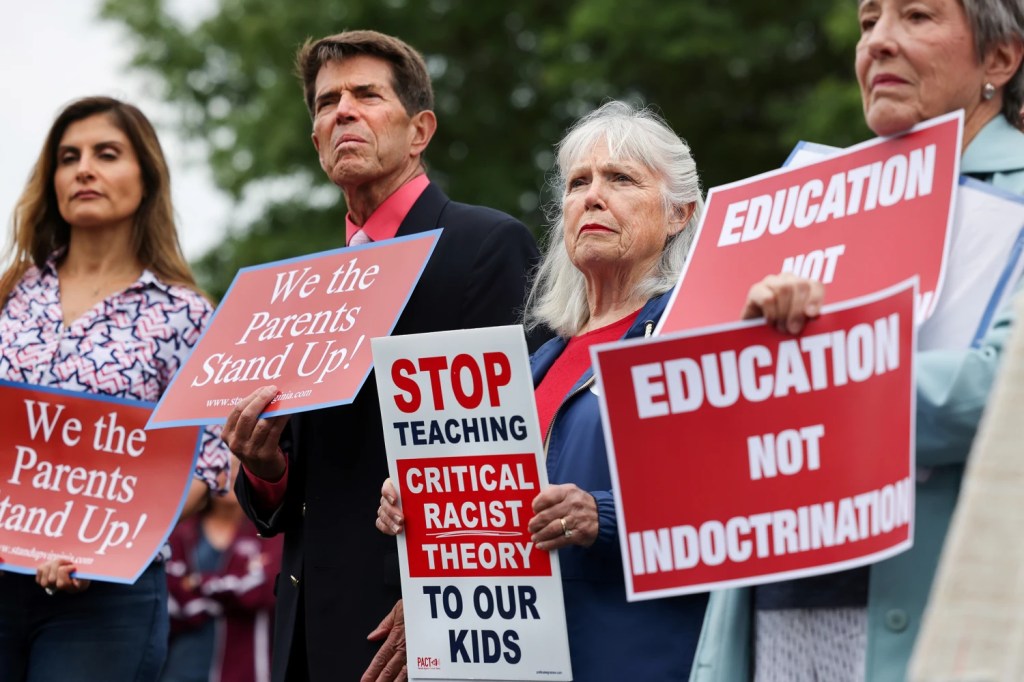
Some adults are in favor of banning books because they believe that literature can influence children in ways they do not agree with, that it has the power to guide children towards certain moral beliefs or to align their sympathies with those of diverse others.
Interestingly, though, according to Martha Nussbaum, the moral value of literature resides precisely in its ability to do those things: guide our moral beliefs and align our sympathies with those of diverse others (D’Olimpio, Peterson 2018, 96-99). Adults who are in favor of book banning recognize that literature has the power to influence beliefs, and it is for this reason that they seek to limit their children’s access to books. Before digging too deep into book banning, though, I’d like to take a closer look at Martha Nussbuam’s thoughts about the moral value of literature. We will begin with eudaimonia.
Literature as a Positive Tool for Moral Education
According to Plato, Aristotle, and other Ancient Greek philosophers, eudaimonia is the ultimate goal of human beings. It is the contentment that comes from a (morally, socially, and intellectually) flourishing life. Communities exist to support the people we love, and to extend a hand to those who are suffering. Because a large part of human flourishing comes from community, it can be argued that eudaimonia connects us with other people.
In “The Ethics of Narrative Art: Philosophy in Schools, Compassion, and Learning from Stories,” Laura D’Olimpio claims that when we exercise eudaimonistic judgment—something Martha Nussbaum identifies as being central to compassion—we come to recognize that the humanity of others is important, and not just to their lives, but to ours as well. (D’Olimpio, Peterson 2018, 98). In other words, through eudaimonistic judgment, the well-being of other people becomes inherently important to us. But connecting with others in this way requires vulnerability. More specifically, it requires a vulnerability that goes both ways.
To truly understand others as human beings with thoughts, feelings, and fears, we must extend our humanity to them, and they must do the same for us in return. In a sense, we have to meet each other halfway, and that can be frightening. Nussbaum explains this as “[one] must take that [other] person’s ill as affecting [one’s] own flourishing. In effect, [one] must make [oneself] vulnerable in the person of another” (Nussbaum 1997, 319). It is an unnerving feeling to be open with another person because, by nature, people are guarded. Allowing ourselves to be vulnerable in order to exercise compassion for other people takes courage. But this is not necessarily the case in fiction.
In fiction, readers can follow a character’s story from their own perspective, witnessing their frustrations, dilemmas, and personal growth firsthand—without being vulnerable in return. It is this one-sided vulnerability that allows us to embrace the humanity of another without experiencing the discomfort of being exposed to them. In this way, fiction acts as a kind of training ground for compassion. Laura D’Olimpio and Andrew Peterson write, “narrative artworks allow us to engage with the thoughts, feelings and goals of key protagonists, and to use our imaginative capacities to develop the sympathy and empathy for others—including others who are different from ourselves—which compassion requires” (D’Olimpio, Peterson 2018, 96).
It can be scary to exercise compassion towards others—especially to those who are different from us. As readers, we witness fictional characters at their highest highs and lowest lows. Because we see the world through their eyes, we are able to connect with them, to metaphorically walk a mile in their shoes, and to extend empathy for them, all within a safe, fictional space. Nussbaum writes, “only in fiction is the mind of the other transparent. The empathetic person attempts to reconstruct the mental experience of another” (Nussbaum 2001, 328). If Nussbaum is right, once we’ve learned to extend empathy towards fictional characters, it will be easier for us to be empathetic towards the real, three-dimensional people in our own lives.
Literature as a Negative Tool for Moral Education
Despite the fact that, by encouraging us to practice empathy, literature can positively affect our morality, there are many explanations for adults’ hesitancy to allow their children to read certain books. Some adults may feel unprepared to explain certain topics—like queer relationships and identities—or are worried about corrupting their childrens’ innocence by introducing difficult subjects like racism or homophobia. Some may seek to limit their childrens’ exposure to things they consider to be inappropriate or to things they simply don’t like, such as sexuality. In extreme cases, though, adults may want to prevent children from recognizing that people who are different from them are also human beings. In their “Examining Patterns within Challenged or Banned Primary Elementary Books,” John Holden Bickford and Devanne Lawson consider the ideas of Rudine Sims Bishop on the subject, saying “challenges [to books] are reactionary responses to the radical change sparked when children’s literature humanizes oft-marginalized groups. Gatekeepers’ focus on children’s literature is unsurprising as books represent a powerful pathway for youngsters to learn about the world, others, and themselves” (Bickford & Lawson 2020, 28).
Other possible explanations for this kind of restricted access could include an argument from Kris Goffin and Stacie Friend’s “Learning Implicit Biases from Fiction,” in which they claim that if fiction has the power to change biases and prejudices for the better, then it also has the power to change them for the worse. Before digging into this claim, the authors make an effort to point out that there are a variety of ways in which fiction might reduce prejudice towards disadvantaged social groups: avoiding stereotypical portrayals of certain groups, providing relevant information about cultures or groups, depicting positive interactions between people of different social groups, promoting empathy, and utilizing evaluative conditioning in which a group is associated with positive emotional stimuli (Goffin & Friend 2022, 2-3). Goffin and Friend then argue that evaluative conditioning can also have the opposite effect—acting as a primary source of implicit biases rather than a tool for combating them—which is not an unheard of phenomenon, or even one that is difficult to imagine in the context of our own lives (Goffin & Friend 2022, 7-9).
For example, suppose a white child watches a TV show in which a Black character is consistently portrayed as being violent or angry or dangerous. This child may start to associate these negative traits with Black people, despite that being a gross misrepresentation. The same concept could apply to homophobia within certain strands of Christianity. If the only things that Christian children are taught about the queer community is that their “lifestyle” is a sin and that their attraction to certain genders goes against the Bible, then they may consider being queer to be fundamentally wrong. All this to say, if scenarios like these are possible in real life, why should fiction be any different?
Goffin and Friend also expand on one of Nussbaum’s claims about literature’s ability to promote empathy. They argue that because empathy itself is biased towards dominant groups in society, if reading literature enhances empathy, it is likely to empower rather than weaken the biases directed towards the socially advantaged (Goffin & Friend 2022, 12). This is another idea that is easy to conceptualize in a real-world scenario, though in this case I will be focusing on two hypothetical news stories rather than a piece of fiction.
Imagine a newspaper article about a husband who murdered his wife and children. In the hypothetical instance where this man is Black, the photo in the paper will likely be a mugshot, and the article will likely say little to nothing about who this man is, what he did for a living, or what his community thought of him. Conversely, in the instance where this man is white, the photo will probably be of him and his “happy” family, and the article will include all of the above details, and more. Despite their crime being the exact same, and equally horrific, the reader is subconsciously persuaded to empathize with the white man because of the way he is presented. He may be portrayed as having been a respected member of the community or an essential part of a family unit, while the other man is portrayed only as a criminal. In the real world, this kind of empathy bias can have serious consequences. In this hypothetical scenario, it enables the audience to subconsciously lean towards forgiving a white man while simultaneously convicting a Black man of the same crime.
Ultimately, Goffin and Friend’s claim that fiction can morally corrupt us is a conditional one, and does not deny its power to morally improve us. That being said, their claim seems to suggest that, in the context of children’s moral education, we need to be careful about what stories we read to children or let them read on their own.
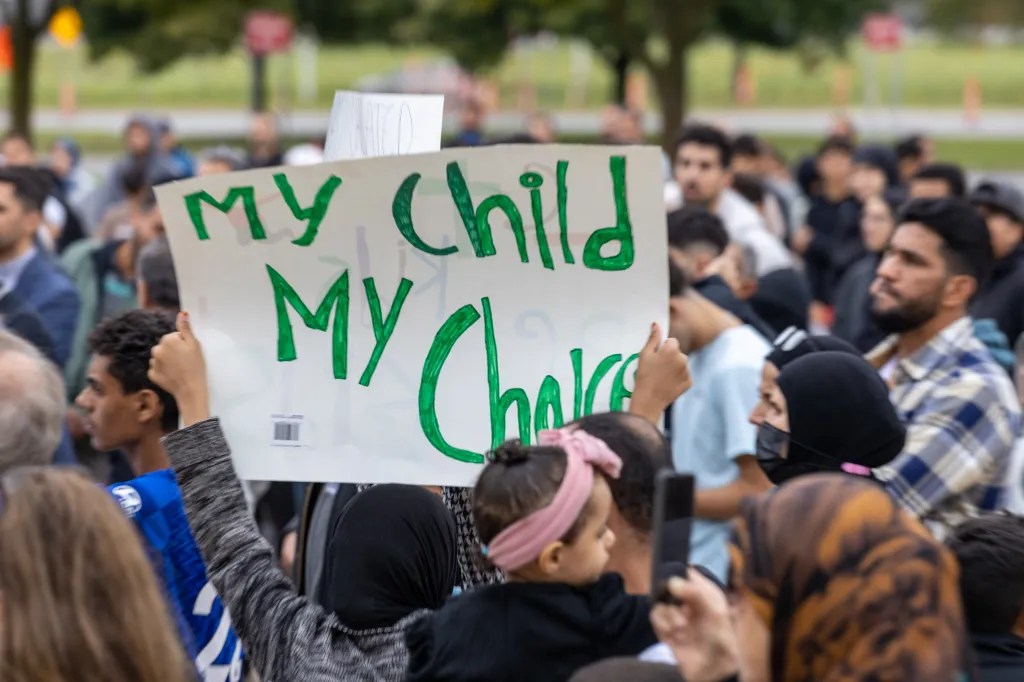
It also suggests that we should consider potential consequences of the way we present difficult topics to children.
What is the responsibility of children’s authors?
Adults’ reluctance to introduce difficult topics to children raises the question of children’s authors’ responsibility. Is it the responsibility of the author to educate their audience in a comprehensive and exhaustive way, or is there wiggle room—a space for authors to set deeper thought into motion, but not fully explain complex subjects? Considerations like these become especially important when the audience in question is children.
Because books can inspire people to be more empathetic and understanding of others, they are important tools for children’s moral education. But this kind of moral education should not fall to authors alone. It is unrealistic to expect them to be childrens’ sole educators on intense or difficult topics. Other adults (whether they are parents, teachers, guardians, and so on) should share this responsibility.
Guidance from adults makes difficult concepts easier to understand, and gives kids a space to ask questions, voice their concerns, and work through moral issues at their own pace. Emily Neville discusses this concept regarding her own children’s book, Berries Goodman. “I think a child is likely to be left at least with a question, a puzzlement about the grownups in this book. Why are they like this? Is this the way people are? And this may make a child look a little more closely, a little more acutely at the people around him” (Neville 1967, 46). It is the social nature of homes and classrooms that encourages children to interact with literature and to discover the lessons within it.
If nothing else, I believe the responsibility of children’s authors is to be truthful. They should not sugarcoat or pretend that difficult things never happen. It would be a disservice to children to attempt to shield them from difficult subjects forever, and it is for this reason that it is important to have these discussions. Susan Fanetti, in her paper “A Case for Cultivating Controversy: Teaching Challenged Books in K-12 Classrooms,” expands on this idea, saying, “we should embrace opportunities for children to learn important lessons about themselves, each other, and the world in safety, with teachers and parents to guide them; we let them down when we leave them in ignorance to figure it all out on their own, especially when the scary stuff is actually happening to them or those they care about” (Fanetti 2012, 9).
Conclusion
Book banning ultimately represents society’s failure to take children seriously, presented under the guise of moral concern. The true motivation behind banning books stems from a desire to regulate the information that children have access to, as there are many adults who think they need to be protected from life’s harsh realities, or from the realities that they themselves disapprove of—like those of diverse others. Though books are a flexible medium and can embody values in a number of ways, I agree with Nussbaum’s belief that the primary value of literature resides in teaching us to empathize with people who aren’t like us. Susan Fanetti says, “when we deny children access to stories about people who have faced struggle and trauma, who have felt different and alone, we deny them the chance to learn about—and talk about with their teachers, their peers, and their parents—struggles from a place of safety, and we deny them the chance to learn that the struggles they themselves have faced are shared” (Fanetti 2012, 7).
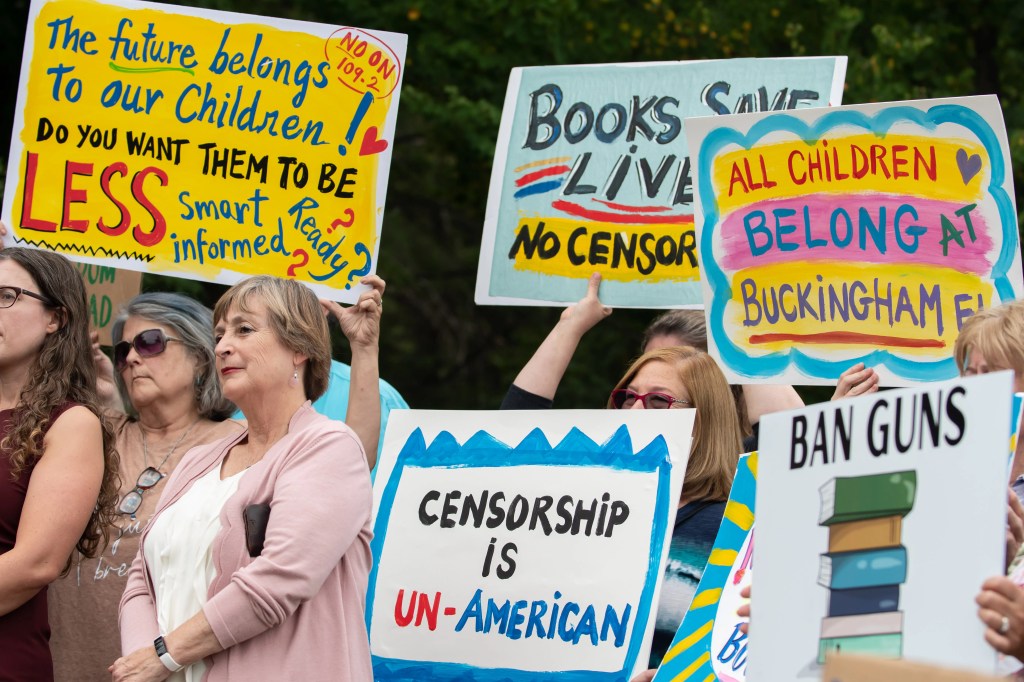
Book bans that aim at preventing children from empathizing with individuals from groups other than their own, be they racial, ethnic, religious, etc., can therefore be considered morally problematic.
There will always be adults who think that children’s authors overstep their boundaries when they introduce difficult topics in their books, but I would argue that books are supposed to teach children about life, and life is not all rose-colored. That being said, it’s important to recognize that this debate is not entirely clear-cut or black and white. There will always be valid reasons for parents to regulate the media or literature that their children are exposed to. One potential reason could be that children’s media can sometimes be very sad. From the separation of best friends in The Fox and the Hound to Mufasa’s brutal death scene in The Lion King, children’s media can be emotionally taxing, and everyone handles emotional stimuli differently. It would be fair to say that parents wanting to protect their children from things that could potentially hurt or emotionally scar them is not a bad thing.
With this in mind, I believe there is a balance to be found between children’s books that are whimsical and fun, and those that teach children important lessons about tough subjects. Every book—no matter its level of difficulty—can serve an important purpose. Children should have the opportunity to read a variety of books, featuring a variety of characters, subjects, and life lessons. In order for this to be possible, adults must come to recognize that children are capable of handling intense subjects, especially when they are presented in ways that are age-appropriate, and in settings that encourage further dialogue.
I will end my paper with another quote from Susan Fanetti, who says, “when we divest literature of anything that might be exciting or upsetting or infuriating, we leave nothing to talk about. Without anything to talk about, there is nothing to learn” (Fanetti 2012, 9).
Bibliography
Allers, R., & Minkoff, R. (1994). The Lion King. Buena Vista Pictures.
Bickford J., & Lawson, D. (2020). Examining Patterns within Challenged or Banned Primary Elementary Books. Journal of Curriculum Studies Research. 2 (1) 16-38.
D’Olimpio, L., & Peterson, A. (2018). The Ethics of Narrative Art: Philosophy in Schools, Compassion and Learning from Stories. Journal of Philosophy in Schools, 5 (1), 92–110.
Fanetti, S. (2012). A Case for Cultivating Controversy: Teaching Challenged Books in K-12 Classrooms. The Alan Review. 40 (1) 6-17.
Goffin, K., & Friend, S. (2022). Learning Implicit Biases from Fiction. Journal of Aesthetics and Art Criticism, 80 (2), 129–39.
Neville, E. (1967). Social values in children’s literature. The Library Quarterly: Information, Community, Policy. 37 (1) 46-52.
Newman, L. and Mola, M. (2017). Sparkle Boy. New York, Lee and Low Books Inc.
Nussbaum, M. C. (1995). Poetic justice: The literary imagination and public life. Beacon Press, Boston, MA.
—. (2001). Upheavals of thought: The intelligence of emotions. Cambridge University Press, Cambridge.
Nyong’o, L. and Harrison, V. (2019). Sulwe. New York, Simon and Schuster Books for Young Readers.
Silverberg, C. and Fiona S. (2015). Sex is a Funny Word: A Book about Bodies, Feelings, and YOU. New York, Seven Stories Press.
Stevens, A., Berman, T., Rich, R., Rooney, M., Russell, K., Bailey, P., Kammerud, J., Bobo, J., Fahn, H., McEntire, R., Swayze, P., & Mannix, D. P. (2011). The fox and the hound: and, The fox and the hound II (Thirtieth anniversary edition.). Buena Vista Home Video.
Titus, R. (2023). Banned Books 2023 – Sex is a Funny Word. Marshall Libraries. https://www.marshall.edu/library/bannedbooks/sex-is-a-funny-word/
—. (2022). Banned Books 2022 – Sulwe. Marshall Libraries. https://www.marshall.edu/library/bannedbooks/sulwe/
—. (2023). Banned Books 2022 – Sparkle Boy. Marshall Libraries. https://www.marshall.edu/library/bannedbooks/sparkle-boy/

