Jessica Whalen
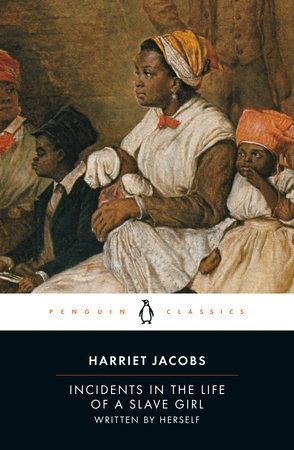
Harriet Jacobs’s Incidents in the Life of a Slave Girl, Written by Herself is unique in the history of the American slave narrative. Only in the late 20th century was a cache of letters discovered that confirmed Harriet Jacobs’s authorship of the work and the factual basis of her history, a history that had previously been contested and suppressed. Earlier critics claimed Lydia Maria Child, her white editor, had an outsized influence on the text, but this is unfairly dismissive of Jacobs’s literary skill and willful artistic design.
A notable feature of Jacobs’s artistry is her ability to assimilate popular literary genres of the time into her narrative while simultaneously revising and subverting them. Literary critic Henry Louis Gates’s concept of signifyin(g), a prominent theory of African American literary criticism, provides a useful framework for describing these revisions. By re-appropriating popular white literary genres to depict her own experiences, Jacobs is able to connect with her primarily white northern audience while acknowledging the limitations of these modes of narrative, or any, to fully convey the horrors of slavery. In this paper, I will focus particularly on Jacobs’s invocation of Gothic horror elements and intertexts. Through signifyin(g) on Gothic literature, I argue, Jacobs finds a culturally accepted model for conveying the unspeakable, the taboo, and the horrific, while at the same time emphasizing the difference of her own experience from that of white Gothic authors and, relatedly, from Harriet Beecher Stowe, author of Uncle Tom’s Cabin.
Previous scholarship on the generic influences within Jacobs’s narrative focuses on the sentimental novel or the traditional slave narrative. Even one essay that argues intertextuality “could be enlarged to include the sentimental gothic novel” within Jacobs’s “pastiche of genres” details only three Gothic elements: the incest theme, doppelgängers, and the graveyard scenes (Wardrop 24). While these three elements are important, I would argue that they are component parts of Jacobs’s larger narrative strategy of Gothic intertextuality. Intertextuality, according to literary critic Henry Louis Gates, is an element of the rhetorical practice of signifyin(g), also sometimes spelled signifying or signifyin’, a specifically African American cultural practice that plays on word meanings. While intertextuality, or a text making meaningful connections to other texts, is a common element of Gothic literature, in Black American literature specifically Gates writes that intertextuality “provides a basis for poiesis,” the emergence of new meanings that “exist as a play of differences” (61). In Chapter VII, “The Lover,” Jacobs actually uses a quote from a Gothic poet to emphasize the impossibility for her of having a traditional sentimental romance. The quote is from Lord Byron’s The Lament of Tasso, written in 1817, describing the poet Torquato Tasso’s imprisonment in a mental hospital. It reads:
Where laughter is not mirth; nor thought the mind;
Nor words a language; nor e’en men mankind.
Where cries reply to curses, shrieks to blows,
And each is tortured in his separate hell. (48)
Through likening slavery to Byron’s white Gothic discourse, Jacobs here creates a new meaning for the poem, highlighting the difference of her experience and signifyin(g) on Byron’s words. For instance, saying “men” are not “mankind” in the context of slavery implies the exclusion of Black men from the universal “mankind” of America’s founding. The most telling line may be “each is tortured in his separate hell,” which in the original poem refers to literal imprisonment and mental turmoil. Jacobs too is literally imprisoned in an attic, and the events of this chapter also “separate” her from her support system, her problems too shameful to reveal to her religious grandmother.
Jacobs mentions hell again later when she describes her reaction toward her mistress’s father, Dr. Flint’s, refusal to let her marry the Black man she loves: “Reader, did you ever hate? I hope not… Somebody has called it ‘the atmosphere of hell;’ and I believe it is so” (52). While the senior seminar Rhetoric of Abolition class’s edition of the text does not annotate this quotation in its Notes, I found that that “Somebody” is in fact Martin Farquhar Tupper, another poet of the Romantic/Gothic tradition. By searching the phrase “hatred is the atmosphere of hell,” I found a page on the website AZ Quotes attributing the quote to him, which I then fact-checked against the Project Gutenberg ebook of his 1838 book Proverbial Philosophy. The book contains the lines, “Hatred is the atmosphere of hell; but anger is known in heaven. / Is there not a righteous wrath, an anger just and holy, / When goodness is sitting in the dust, and wickedness enthroned on Babel?” (61). Therefore, if Jacob appears superficially to regret her hatred of Flint, the context of the original quote implies the actual justification of her condemnation of him. This intertextual suggestiveness shows that her anger at him is righteous, and that the system of slavery allows, even “enthrones,” his wrongs. In this chapter, her Black lover is characterized as an “honorable” and “respectable” suitor, contrasted with the “base” and “animal” Dr. Flint (52). In a traditional sentimental novel, a popular genre of the time that includes such works as Richardson’s Pamela and Clarissa, the heroine either marries her suitor or loses her “virtue” to her seducer, usually dying as punishment. Subversively, Jacobs’s autobiographical avatar Linda Brent and her honorable suitor do not marry by the end of her text, nor does Linda give in to Flint’s seductions and die a fallen woman’s death. Carolyn Sorisio notes that Jacobs’s revision of the sentimental romance “suggests that the stories of the slave woman cannot fall into the genres she has used” (11). I agree and would argue that Jacobs’s incorporation of Gothic intertextuality, likewise, shows how what could have been a True Woman’s sentimental romance is forever corrupted by the horrific reality of her position as a female slave.
The ending of Jacobs’s narrative underscores the difference between her experience and the life of a sentimental heroine. The text’s penultimate paragraph opens with: “Reader, my story ends with freedom; not in the usual way, with marriage” (237). This calls to mind the famous ending of Jane Eyre, published thirteen years prior: “Reader, I married him” (436). Jane Eyre, too, is heavily inflected with Gothic themes, such as the doppelgänger relationship between Jane and Bertha Mason, the secret wife Jane’s fiancé keeps imprisoned in his attic (spoiler alert, I know). Viewing Jane Eyre as an intertext of Incidents calls to mind the years Linda, like Bertha, spent in confinement. In this figuration, Linda Brent is both the sentimental gothic heroine and the “Madwoman in the Attic,” the term coined by Gilbert and Gubar, in their book of the same name, to describe Victorian literary depictions of socially unacceptable femininity. In nineteenth-century England and America, all women were socially expected to maintain the four virtues of purity, piety, domesticity, and submissiveness, a code of behavior that “represented one of the most oppressive power structures in literature and culture” and extended not only to middle-class white women but Black women as well (Larson 739). Under the Cult of True Womanhood, a female literary character was either a True Woman who upheld these virtues and married, such as Jane Eyre, or a fallen woman who failed to uphold them and died, such as Bertha Mason. Jacobs refuses to conform herself to either of these limiting archetypes, envisioning an alternative third option for herself: not death, not marriage, but freedom.
Indeed, the section of the book that is the most heavily Gothic is precisely the period Jacobs spends imprisoned in an attic. She initially hides from Flint in a room of a neighbor’s house, then spends nearly seven years hidden in a small, dark garret she describes as being “shut up in a living grave” (174). At one point during the former confinement, she relocates to a smaller hiding spot below “a plank in the floor,” also described as being “stowed under the floor” (124, 132). These intimations of being buried alive and hidden under floorboards evoke Edgar Allen Poe’s short stories, Gothic tales haunted by undead presences and the threat of live burial. Blurring the boundaries between death and life is a common theme in the Gothic, and Jacobs describes slavery in similar terms: “I had rather live and die in jail, than drag on… through such a living death” (66, emphasis mine).
One question that arises from this close reading is, have these trends continued into contemporary abolitionist texts, particularly those written by Black women? Contemporary books advocating for prison reform or prison abolition in the U.S. tend to rely more on general facts and figures than personal narratives, but they do frequently draw connections to previous abolitionism. This connection between past and present oppressive structures is the throughline of Michelle Alexander’s The New Jim Crow, in which she persuasively argues that systems of racial control in the U.S. have not disappeared, but taken on the new form of mass incarceration. Throughout the past 50 years, the War on Drugs has continued to disproportionately target vulnerable communities of color, allowing millions of Black Americans to be incarcerated, labeled felons, and stripped of voting rights for life for minor drug offenses. Even if one is not labeled a felon, any criminal record enables completely legal and ostensibly “colorblind” discrimination in housing, hiring, and many other areas. In a chapter titled “The Cruel Hand” after a quote from 19th-century abolitionist Frederick Douglass, Alexander writes that “commentators liken the prison label to ‘the mark of Cain’… ‘internal exile,’” and even “a form of ‘civic death’” (142). Clearly, the Gothic concept of a living death remains a poignant symbol of oppression to this day, one that “indicts and purveys the haunted character of United States history and culture” (Wardrop 33). Returning to Jacobs, I would add that specific Gothic intertexts are a constant presence that haunts her narrative. As Jacobs writes of being literally trapped, she reminds her reader that she is also figuratively trapped within the confinements of genre, white expectations, and established systems of signification.
In this regard, what can we make of her assertion that she was “stowed away under the floor”? This line may evoke Poe but – if you’ll excuse the pun – it also evokes another writer of the era: Harriet Beecher Stowe. The historical relationship between Jacobs and Stowe was an uneasy one. In the hopes of having Stowe help publish her autobiography, Jacobs contacted her inquiring whether Jacobs’s daughter Louisa could follow Stowe to England. Not only did Stowe decline this request, but she sent Amy Post’s private account of Jacobs’s life in slavery to her white employer Mrs. Willis, asking Willis to verify the story for use in The Key to Uncle Tom’s Cabin. Jean Fagin Yellin writes this left Jacobs feeling “denigrated as a mother, betrayed as a woman, and threatened as a writer” (276). She wrote back declining to have her story used as part of the Key because it “needed no romance,” but offering to give Stowe some facts to use (276). Stowe never replied. It was this interaction that prompted Jacobs to write her story herself, with the preface by Child. Perhaps now we can see this tension in the three times Jacobs uses the verb “stow” in her narrative: twice during Linda’s escape, and once during her time in the North. Indeed, significantly, the second time refers to an enslaved woman named Fanny being “stowed away in a very small cabin,” a possible allusion to Stowe’s explosively popular work (180, emphasis mine). What’s more, while escaping, Fanny actually adopts Linda Brent’s name as an alias, making her a doppelgänger for Linda. Since Linda herself is Jacobs’s own autobiographical alias, we could say that this line suggests that a false version of a false version of Jacobs has been confined by Stowe in her fiction and, in her own Gothic revision, Jacobs has later “signified” on Stowe’s precursor abolitionist text.Through viewing Incidents in the Life of a Slave Girl as a highly intertextual, semi-Gothic narrative, we better understand how Jacobs manipulates the constraints of genre to suit both her artistic and political purposes. Jacobs’s correspondence with Stowe, and the latter’s dismissive treatment of Jacobs, reveal the historical and cultural context that may have caused Jacobs to symbolize her own erasure. Where the white Anglophone literary canon does not allow her the space to articulate her own experience, she creates one: within her narrative, Jacobs refers to her Gothic attic space as ‘the loophole of retreat.’ And here we also see her, through the use of situated signification, create an intertextual loophole. The Gothic genre provides Jacobs with the tools to point to unspeakability: the technique of signifyin(g) provides her with the strategy. By understanding the deployment of these devices as artistic designs made consciously, we can recognize Jacobs’s skill as a writer. Her fight for freedom was to extend to the prison of language structures, and she would refuse to be confined by genre restrictions or “stowed away” by convention.
Bibliography
Alexander, Michelle. The New Jim Crow: Mass Incarceration in the Age of Colourblindness. Penguin Books, 2019.
Brontë, Charlotte and Juliette Atkinson, Margaret Smith (ed.), Jane Eyre, 3rd edn (Oxford, 2019; online edn, Oxford World’s Classics, Dec. 2020), http://dx.doi.org/10.1093/owc/9780198804970.001.0001, accessed 18 Feb. 2024.
Gates, Henry Louis. “A Theory of the Tradition.” The Signifying Monkey : A Theory of Afro-American Literary Criticism. Oxford University Press, 1988.
Jacobs, Harriet. “Harriet Jacobs to Amy Post, March 1854.” Isaac and Amy Post Family Papers, D.93, Rare Books, Special Collections, and Preservation, River Campus Libraries, University of Rochester.
Jacobs, Harriet. Incidents in the Life of a Slave Girl. Modern Library, 2021.
Larson, Jennifer. “Converting Passive Womanhood to Active Sisterhood: Agency, Power, and Subversion in Harriet Jacobs’s Incidents in the Life of a Slave Girl.” Women’s Studies, vol. 35, no. 8, 2006, pp. 739–56, https://doi.org/10.1080/00497870600945618.
Sorisio, Carolyn. “‘There Is Might in Each’: Conceptions of Self in Harriet Jacobs’s Incidents in the Life of a Slave Girl, Written by Herself.” Legacy (Amherst, Mass.), vol. 13, no. 1, 1996, pp. 1–18.
Stansbury, Heather Lyn. “Bound By Blood: Incestuous Desire in the Works of Byron.” Byron Journal, vol. 40, no. 1, 2012, pp. 17–28, https://doi.org/10.3828/bj.2012.4.
Tupper, Martin Farquhar. Proverbial Philosophy: A Book of Thoughts and Arguments. New York, Wiley & Putnam, 1847. Pdf. Retrieved from the Library of Congress, <www.loc.gov/item/39032311/>Wardrop, Daneen. “‘What Tangled Skeins Are the Genealogies of Slavery!’: Gothic Families in Harriet Jacobs’ Incidents in the Life of a Slave Girl.” Literary Griot: International Journal of Black Expressive Cultural Studies, vol. 14, no. 1–2, 2002.

