Brandon Roberts
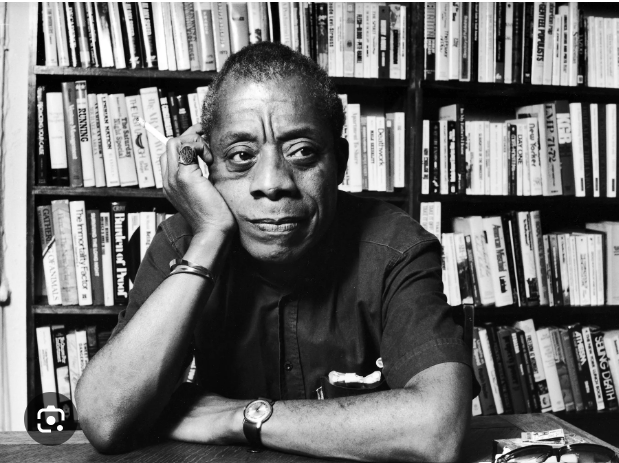
In tracing the theoretical mind of James Baldwin, Melvin Rogers shows a particular interest in the nature and function of guilt: how it manifests in the American mind and how it paralyzes (white-)America in the face of necessary action.
Baldwin’s biting critique of American “moral monsters” often engenders this exact sort of guilt, but he nonetheless recognizes the danger of apathy associated with mere guilt and calls instead for a different type of response: faith and atonement. These concepts are fundamental to understanding Baldwin’s political philosophy and Rogers’s analytical project; they permeate the ideology of the former and find scholarly interpretation in the latter, and they are the key to explicating the “proper relationship” between America’s ideals, its history, and its future.
Baldwin’s critique, which Rogers takes up in his book, is directed at the “good white people” whose “liberalism” often stymies the chance for real social change. There is an impulse among these white liberals to hold the Declaration of Independence up as the “true nature” of America, as ‘who we really are’: “We hold these truths to be self-evident, that all men are created equal, that they are endowed by their Creator with certain unalienable Rights, that among these are Life, Liberty and the pursuit of Happiness.” In the light of this absolute ideal and without an adequately critical conscience, we can be tempted to situate this principle at the ‘core’ of American social ideology, subsequently describing every American injustice as a fluke — as ‘not who we really are.’
This view is best exemplified by Gunnar Myrdal, a Swedish sociologist enamored with the “American Creed.” Myrdal clings to an idealistic optimism, and reads American injustices as “aberrations” from our pure ideals. Perhaps there is nothing inherently wrong with optimism, but Myrdal’s usage carries with it certain historical risks. When American ideals are held up as pure and eternal, injustice is an architectural impossibility: slavery becomes an “aberration,” as do lynchings, segregation, and all other instances of racist violence. They are exceptions to the rule rather than being central to the rule itself. American history is seen not only as marching toward justice, but as already having accomplished justice in its origin. The political project of optimistic liberalism is therefore clear: we must ‘recover’ our ‘founding principles’ and exalt our ‘origin story’ in order to move ‘beyond’ those injustices which threaten to stain American idealism (Rogers 270).
Critically, by vindicating the founders and their supposedly just institutions, Myrdal avoids the contradictions between the principles of the Declaration of Independence and the historical facts of enslavement and colonization. The pop-critical avenue for attacking Myrdal’s work (and the Founders generally) is therefore easy to see: these contradictions are omnipresent and pernicious, making the American project hypocritical and fundamentally false. This is seemingly the position of prominent writers like Nikole Hannah-Jones and Ta-Nehisi Coates, whose works deal with the American contradiction as an utter indictment against its character. In this sense, Hannah-Jones and Coates mirror Myrdal in their arguments: America was indeed founded on a core principle, but instead of the “American Creed” taking this position, the modern critique names slavery and racial prejudice as the pure “original” principle. In Rogers’s words, they agree that America is indeed “once-born” (270-71).1
For Rogers, the ideology of “origin” is dangerous on both sides, as it effectively concretizes our history into a national “essence.” This is what it means to be “once-born,” chained to this ‘original foundation’ and forever seeking ‘who we really are.’ For Myrdal, this foundation is 1776 and the “American Creed;” for Coates and Hannah-Jones, it is 1619 and American slavery. When the nation ‘is what it is,’ and Myrdal wants so desperately for America to be a just and equal place, then he is led to assert that we once were what we want to be — that justice is intrinsic to the architectural design. Systemic violence is swept away in the tide of “historical mistakes,” and never reckoned with as a stain on the nation’s soul. Thus, “the once-born is prevented from accepting evil as a real feature of human nature,” and injustice is consequently treated as an ‘aberration’ from the norm of the American Creed (Rogers 271-2; cf. 280-1). In the case of Hannah-Jones and Coates, the reversal of these principles leads us to the same place: rather than having been what we want to be, we are what we used to be; the once-born is prevented from accepting freedom and progress as real features of human nature; justice is merely an aberration; and positive change is swept away as a fluke of history which can never be fully realized. The fatalism of the latter position is as striking as the blind optimism of the former.
But all is not lost, and for Rogers, Baldwin shows us an alternative path: atonement, forgiveness, and the “twice-born” nation. To be twice-born is to replace the nation’s “origin” with its “beginning,” a far less static concept — the nation can, and indeed must, begin again. “Nothing short of rebirth is required,” Rogers writes, but notice the parameters of this new life: “a reawakening by embracing the nation’s trauma as also what the nation is” (277). Beginning again does not mean turning a blind eye to what came before, but holding in tension the contradictions of the American nation. Rogers continues, “African American thinkers argued that the way to a new America must run through the trauma of black life — a twice-born faith in James’s sense that did not remit the nation’s failures but held promises and betrayals clearly in view” (281). Those promises and betrayals are often beyond our historical reach, committed by generations prior to our own — but this is not an excuse to refuse atonement. To privilege the promises over the betrayals (or vice versa) is to fail the task of responsibility that Baldwin lays out for us and to ignore the social truth that Rogers illuminates: “We are inescapably dependent on each other” (278), whether the ‘other’ is our neighbor or our past selves.
At this point, Rogers’s position on the “proper relationship” between the Declaration (our promises) and racial injustice (our betrayals) should be exceedingly clear: these phenomena form a dialectical relationship. In other words, their contradiction is not incidental but theoretically and politically fundamental. For Hegel, the dialectical project asserts that every Substance contains its ‘negation,’ or its own undermining tendency. The philosophical (and by extension, political) project of dialectics therefore requires us not to discard contradiction or otherwise attempt to remove it, but instead to engage in what Hegel calls “tarrying with the negative” (Hegel 19-23). To “tarry,” according to the OED, means “to remain, stay, abide, continue” — and is this not precisely Baldwin’s point as described by Rogers? To begrudgingly “abide” with the negation of American ideals — in this case, racial violence and oppressive structures — as also central to the historical enterprise, and to nonetheless press on into a more just future? As Rogers describes, “through [Baldwin], we discover a nation traumatized by self-inflicted wounds, and he hopes that we remember just enough to act responsibly but not so much that we give up” (269). Tarrying with the negative does not mean giving ground to its evils, giving up on our first principles, or any other sort of all-or-nothing position. It entails this careful balance of responsibility, which instills guilt only insofar as it is actionable. Put another way, “the perfectionist ethos…in Baldwin’s hands is not about overcoming and thus escaping our trauma but often living in the light of a trauma that constantly threatens to intrude on our lives” (289-90). To live in the light of the negative is Baldwin’s Hegelian pivot — “both his inheritance and his gift” (269).2
Thus, Rogers remains faithful without being naïve in his stance toward American history. To have faith is to believe that America can indeed ‘tarry with the negative,’ that it can pave a liberatory future which does not absolve itself of its past, but carries its memory of injustice into reparative work. I would even argue that this faith is the core of progressive political critique: both the liberal and conservative positions efface contradiction in favor of a “pure” notion of the nation, its politics, and its people. For Baldwin and his political acolytes, a progressive politics of faith presents the only political program willing to wrestle with the contradictions of American history. This political work, which Rogers calls “the hard work of democracy” (290), does not present a “way out” of American violence or American idealism. For Baldwin and Rogers, the only way ‘out’ is through.
Endnotes
- Rogers, “Keeping the Faith”; Hannah-Jones, “Our democracy’s founding ideals…”. ↩︎
- I could go on; Baldwin as presented by Rogers appears to me the most compelling dialectical theorist of the 20th-century, and the most equipped to show how dialectics is indeed an anti-racist project. As one more example, “To be released from the past or forgiven for it is not the same as absolving one of the horrors that the past represents in time” (288). Forgiveness without absolution is perhaps the purest form of “tarrying with the negative.” ↩︎
Bibliography
Hannah-Jones, Nikole. “Our Democracy’s Founding Ideals Were False When They Were Written. Black Americans Have Fought to Make Them True.” New York Times Magazine, August 14, 2019.
Hegel, G.W.F. Phenomenology of Spirit. Translated by A. V. Miller. Oxford, UK: Oxford University Press, 1977.
Rogers, Melvin L. The Darkened Light of Faith: Race, Democracy, and Freedom in African American Political Thought. Princeton, NJ: Princeton University Press, 2023.
———. “Keeping the Faith.” Boston Review, November 1, 2017.

